

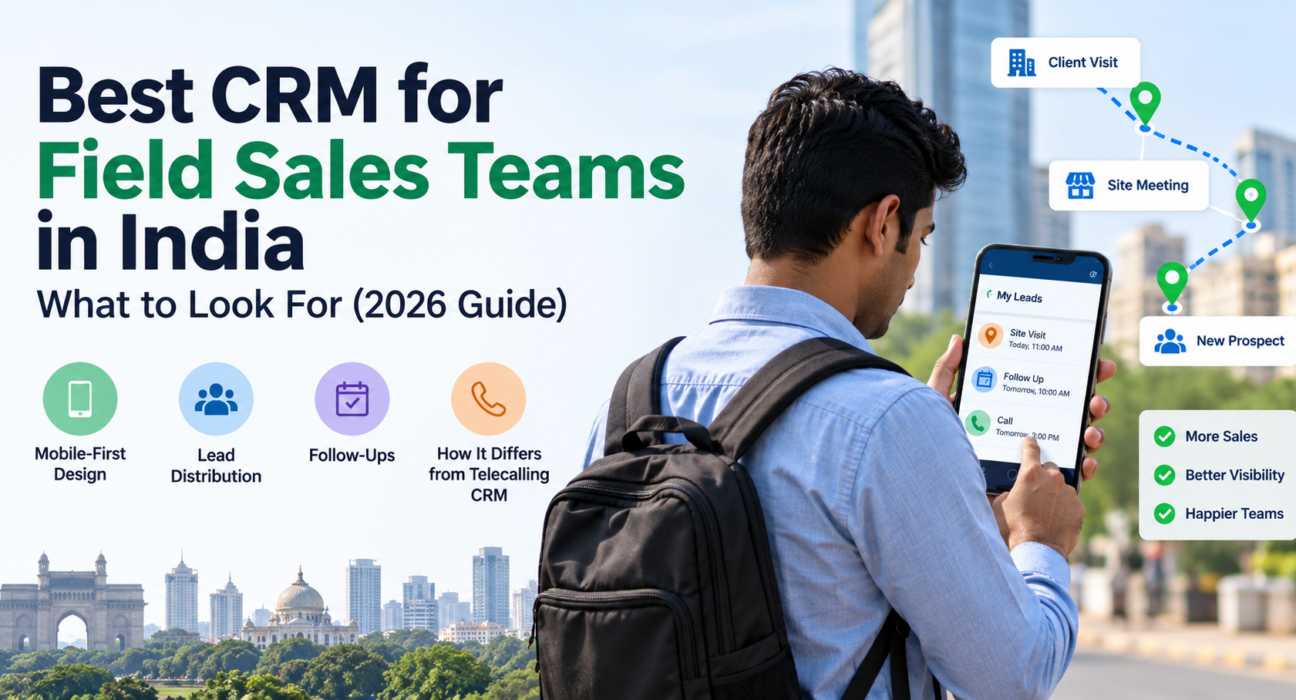
Best CRM for Field Sales Teams in India: What to Look For (2026 Guide)
If your sales reps are out on the road meeting customers, visiting sites, or door-knocking in a territory, a generic CRM built for desk-bound sales teams will not solve your real problems. You need something that works on a phone, survives patchy network in tier-2 and tier-3 towns, and still gives your sales manager visibility into what happened on every visit.
This guide explains what a field sales CRM actually needs to do, how it is different from a telecalling or inside-sales CRM, and how to choose the right one for your team. Businesses comparing options such as a field sales CRM that also handles phone-based follow-ups will find the mobile-first approach covered below especially useful, since most Indian sales teams run a mix of calls and visits, not one or the other.
What Is a Field Sales CRM?
A field sales CRM is software built to support sales reps who spend most of their time outside the office — visiting prospects, dealers, hospitals, sites, or homes. It typically runs on a mobile app first, since reps rarely sit at a desktop.
At a minimum, a field sales CRM should let a rep see their assigned leads or accounts, log what happened at a visit or call, schedule the next follow-up, and let a manager track activity without asking for a manual update at the end of the day.
Field Sales vs Inside Sales (Telecalling) CRM: What’s the Difference?
Many “field sales CRM” and “telecalling CRM” listings online use the terms loosely, so it helps to separate the two before you buy.
| Requirement | Field Sales CRM | Telecalling / Inside Sales CRM |
|---|---|---|
| Primary channel | In-person visits | Phone calls |
| Core tool | Visit logging, route planning | Auto dialer, call tracking |
| Location relevance | Often needs visit/location logging | Not usually required |
| Connectivity need | Must work offline or on weak network | Needs stable data/calling network |
| Manager visibility | Visit reports, check-ins | Live call monitoring, war room |
| Follow-up style | Scheduled next visit or call | Scheduled callback |
In practice, most Indian sales teams are not purely one or the other. A real estate executive calls a lead to qualify interest, then drives to the site for a visit. An insurance agent phones a prospect first, then meets them to close the policy. This is why a CRM that handles both calling and mobile follow-up well often serves field teams better than a narrow, visit-only app.
What to Look For in a CRM for Field Sales Teams
Before shortlisting any product, check it against these practical requirements.
1. A genuinely mobile-first app
Your reps will use their phone, not a laptop, for almost everything. The app should let them view assigned leads, log outcomes, and check follow-ups without needing a strong office network. If the “mobile app” is really just a shrunk-down website, it will frustrate agents in the field.
2. Fast lead assignment and distribution
When a lead comes in from a property portal, an ad campaign, or a walk-in enquiry, it should reach the right rep automatically — by territory, language, or availability — rather than sitting in an inbox until someone manually assigns it.
3. Reliable follow-up scheduling
Field sales cycles are long. A property buyer might take three months to decide; a loan applicant might need five touchpoints. The CRM needs dependable reminders so a scheduled visit or call is never missed, with overdue items clearly flagged for the manager.
4. Call and visit history in one place
A rep should be able to open a lead and instantly see every past call, message, and visit note. Without this, every new interaction starts from zero, and customers notice when a company “forgets” previous conversations.
5. WhatsApp and SMS alongside calling
Field sales in India runs heavily on WhatsApp — sharing brochures, price lists, and location pins. A CRM that supports WhatsApp and SMS messaging alongside calls, on one thread per lead, saves reps from switching between five different apps.
6. Manager visibility without micromanagement
Sales managers need to know who is active, who is falling behind on follow-ups, and how the pipeline is moving — through dashboards and reports, not by calling each rep individually every evening.
7. Pipeline and revenue tracking
Field sales usually means bigger-ticket items with longer cycles — property, insurance, vehicles, industrial equipment. The CRM should let you attach a deal value to each lead and track it through stages so you can forecast revenue, not just count leads.
8. Straightforward setup and pricing
Smaller and mid-sized businesses cannot afford long implementation projects. Look for a CRM that a non-technical sales manager can set up in a day, with pricing that does not multiply every time you add a user.
Common Mistakes Businesses Make When Choosing a Field Sales CRM
- Buying features nobody will use. A CRM with 50 modules is not helpful if your reps only ever use three of them. Match the tool to how your team actually works.
- Ignoring what happens without network. Many field areas in India still have patchy connectivity. If the app cannot function reliably on 3G or intermittent data, adoption will suffer.
- Skipping the pilot. Rolling out to the entire team on day one, without testing with 3–4 reps first, makes it hard to fix workflow issues before they become habits.
- Treating calls and visits as separate systems. If calls live in one app and visit notes in another spreadsheet, managers lose the full picture of a customer’s journey.
- Overlooking follow-up discipline. The single biggest reason field sales leads go cold is a missed follow-up. A CRM without reliable reminders will not fix a team’s follow-up habits on its own.
Real-World Examples of Field Sales Workflows
These are illustrative examples of how field-heavy industries typically use a CRM, not case studies of any specific customer.
Real estate: A telecaller qualifies an inbound enquiry from a property portal, books a site visit, and hands the lead to the field executive who meets the buyer on-site. The site visit outcome and the buyer’s budget get logged so the next follow-up call already has full context.
Insurance: An agent calls a lead from a renewal list, explains the plan, and schedules a home visit to complete paperwork. Every call and visit note stays attached to that customer’s record for future renewals.
Automobile dealerships: A showroom telecaller books a test drive from an inbound Facebook lead, and the sales executive who conducts the test drive logs the outcome and the customer’s likely purchase timeline before the next follow-up call goes out.
In each case, the field visit and the phone call are two steps in the same sales process — not two separate systems.
How TeleCalling CRM Fits Hybrid Call-and-Visit Sales Teams
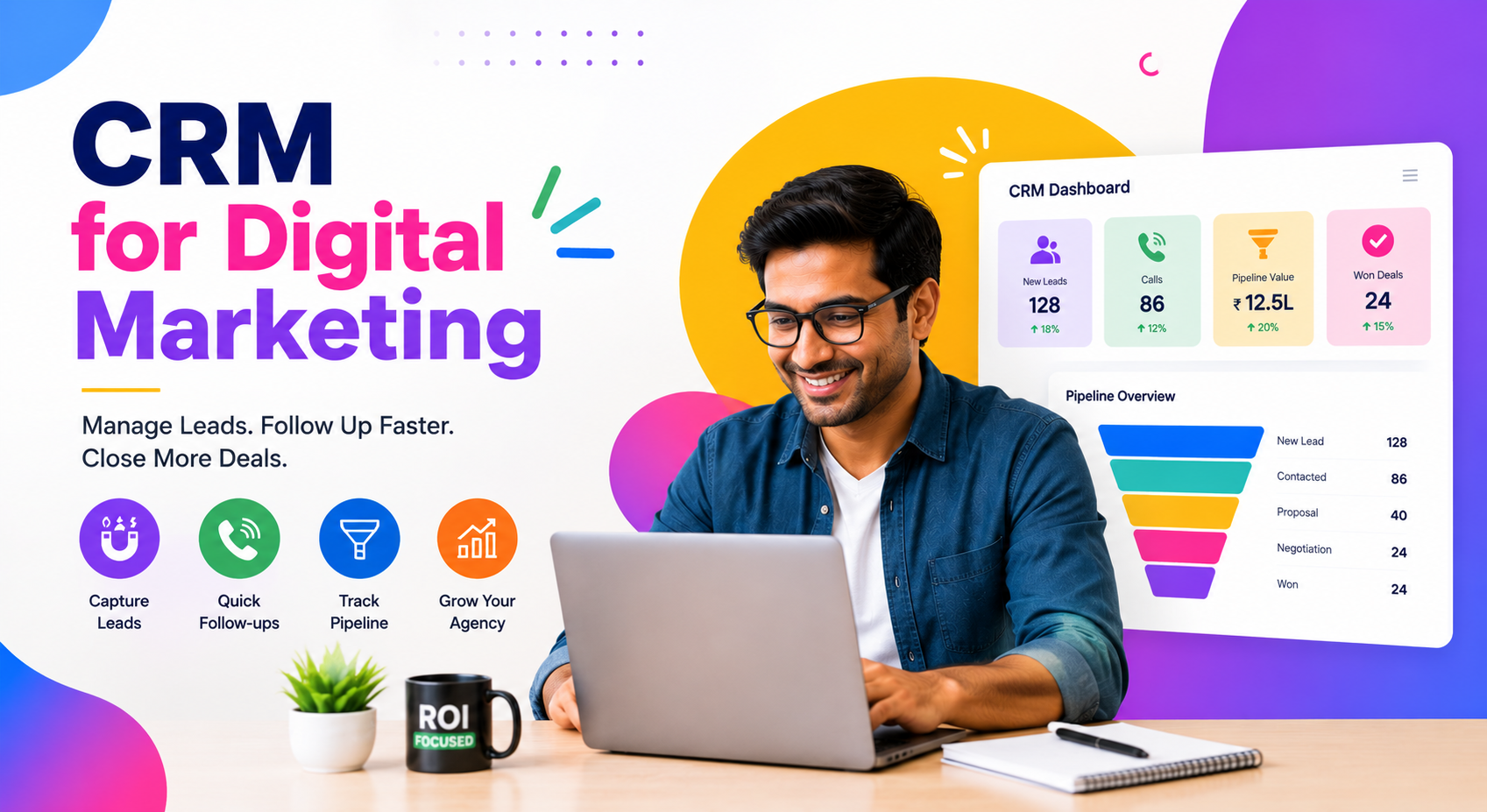
TeleCalling CRM is built primarily as a telecalling and lead-management platform, with an Android and iOS mobile app included in every plan. For sales teams that combine phone follow-ups with field visits — which describes most real estate, insurance, automobile, and loan/DSA teams in India — this means reps can manage their assigned leads, place calls through the auto dialer, log outcomes, and send WhatsApp templates from the same phone they carry into the field.
Relevant capabilities for this kind of team include:
- Lead auto-distribution, so enquiries from property portals, Google Ads, or Facebook lead forms reach the right rep by territory or language without manual sorting.
- Follow-up scheduling and reminders, so a promised call-back after a site visit or a home meeting does not get missed.
- Sales pipeline with deal value and stages, useful for tracking high-ticket, long-cycle sales like property or insurance from first enquiry to closed deal.
- A unified call, SMS, WhatsApp and email history on every lead, so a rep walking into a visit already knows the full conversation so far.
- A live team dashboard for managers to see calling activity, follow-up completion, and pipeline movement without chasing updates.
TeleCalling CRM does not include GPS-based visit check-ins or route/beat planning, so if your field sales process depends heavily on verifying rep location or optimising daily travel routes, you should check for those specific capabilities before choosing any CRM, including this one. It is best suited to teams whose field visits are supported by strong phone-based lead management, rather than teams that need location-tracking as the core requirement.
Frequently Asked Questions
What is the difference between a field sales CRM and a regular CRM?
A field sales CRM is designed for reps who work outside the office, with a mobile-first app, offline-friendly design, and visit or call logging built for people on the move. A regular CRM is often designed for desk-based use and may not work well on unreliable mobile networks.
Does a field sales CRM need GPS or location tracking?
Not always. Some businesses need location verification for compliance or route planning, while others only need reliable lead management, call logging, and follow-up reminders. Decide based on your actual process before shortlisting tools.
Can a telecalling CRM work for field sales teams?
Yes, if your team’s process includes phone-based qualification and follow-up alongside field visits — common in real estate, insurance, and automobile sales — a telecalling CRM with a strong mobile app can cover most of the workflow, provided it also supports lead assignment, follow-up scheduling, and visit-related notes.
How much does a CRM for field sales teams cost in India?
Pricing varies widely, from per-user monthly plans to flat team pricing. TeleCalling CRM, for example, uses flat monthly pricing starting at ₹999/month for up to 5 users, with every feature included in every plan rather than charged as add-ons.
What should a small business prioritise first when buying a field sales CRM?
Start with lead assignment, follow-up reminders, and a mobile app that works reliably in the areas your reps actually visit. Advanced features like AI call scoring or automation workflows matter more once the basics are solid.
Is WhatsApp integration important for field sales in India?
For most Indian field sales teams, yes. Sharing brochures, price lists, and location pins over WhatsApp is now a standard part of the sales process, so a CRM that keeps WhatsApp conversations attached to each lead avoids a lot of manual copy-pasting.
Conclusion
Choosing a CRM for a field sales team comes down to matching the tool to how your reps actually work — mostly on their phones, often with unreliable connectivity, and usually combining calls with in-person visits. Get the basics right first: fast lead distribution, dependable follow-up reminders, and a single history of every call and visit per customer.
For teams whose field sales process is built around strong phone-based follow-up — real estate, insurance, automobile, and loan sales being common examples — a telecalling software built for Indian sales teams can cover the calling, WhatsApp, and lead-management side of the job well, as long as you check it against your specific requirements around location tracking or route planning first.