

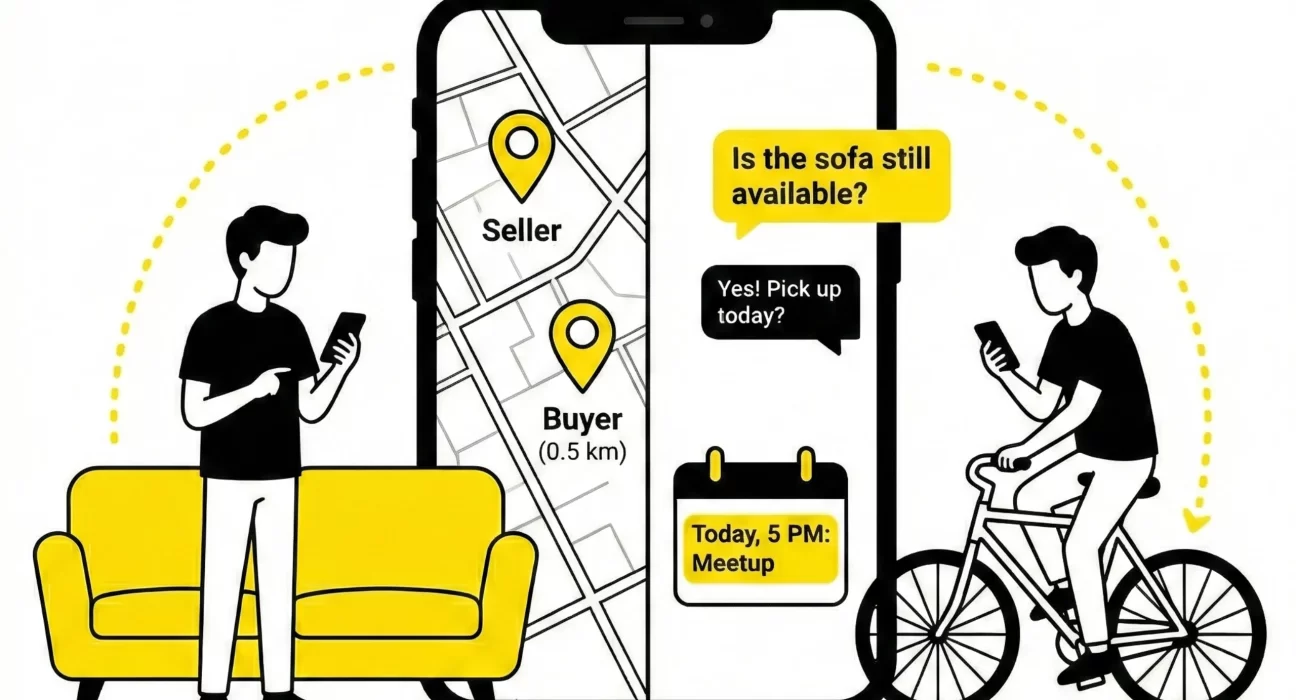
You’re selling a sofa. It’s heavy, bulky, and in good condition. You just need someone to come pick it up.
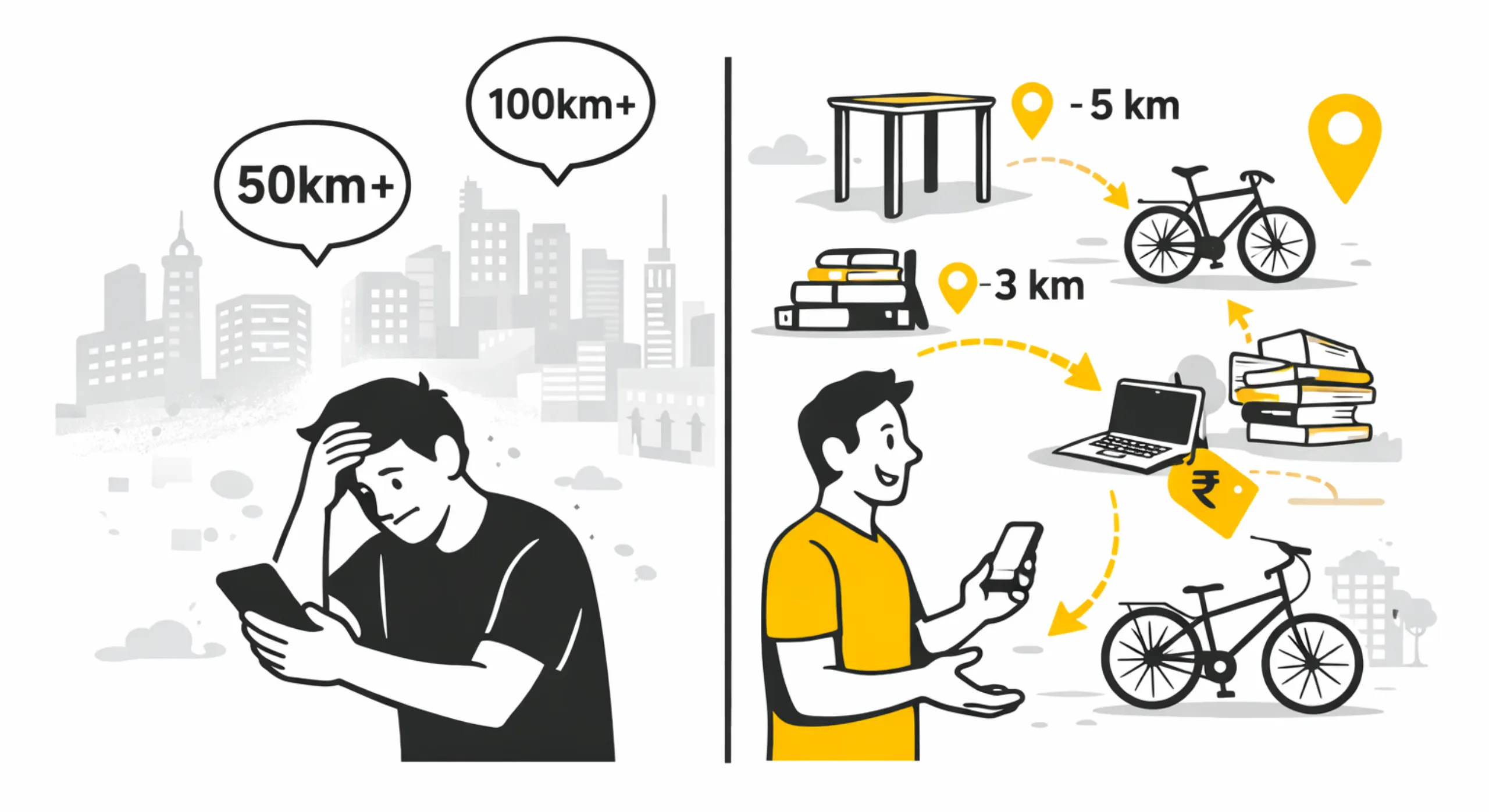
You list it on a large marketplace. Within hours, messages pour in. Half are from other cities asking about shipping. Others want detailed measurements for courier quotes. Someone offers to buy it but needs it delivered 50 kilometres away.
None of this helps. You just need a local buyer who’ll collect it this weekend.
Big marketplaces cast wide nets. They connect buyers and sellers across cities, states, and regions. This works well for small, shippable items. But for everyday local transactions, it creates unnecessary complexity.
Sympl works differently. It focuses entirely on connecting local buyers and sellers in the same area. No nationwide shipping. No distant transactions. Just people nearby who can meet, inspect items, and complete deals quickly.
The Problem with Nationwide Reach for Local Items
Large marketplaces optimize for maximum reach.
Their goal is connecting as many buyers and sellers as possible, regardless of location. Sophisticated logistics enable shipping anywhere in India.
This creates real value for certain transactions. But it also creates problems for everyday buying and selling.
Issues with wide-reach platforms:
Listings get buried under thousands from across the country. Your sofa in Pune competes with sofas listed in Mumbai, Delhi, Bangalore, and everywhere else.
Most responses come from people too far away. You spend time answering questions from buyers who can’t actually collect the item.
Shipping becomes an expectation. Buyers ask if you’ll courier a dining table. The logistics and cost make it impractical, but the conversation wastes your time.
Local relevance gets lost. Someone searching in Koramangala sees results from Whitefield, Hebbal, and areas an hour away in traffic.
For items like furniture, bikes, appliances, or anything heavy or bulky, this nationwide approach creates friction rather than solutions.
What Local Focus Actually Means in Practice
When a platform focuses on local connections, everything changes.
Sympl’s local approach isn’t about limiting options. It’s about increasing relevance.
How this works practically:
Search results show only nearby listings. Someone in Andheri sees items from Andheri, Bandra, Juhu. Not from Thane or Navi Mumbai unless they expand their search.
Sellers connect with buyers who can actually collect items. No wasted conversations about shipping furniture or coordinating courier pickups.
Meetings happen conveniently. Both parties know the area. Suggesting “near Phoenix Mall” or “Koramangala Metro” makes immediate sense.
Transactions close faster. When distance isn’t an obstacle, deals that would take weeks elsewhere finish in days.
This local focus creates natural efficiency. You’re not filtering through irrelevant options or managing complicated logistics.
Real Examples Where Local Matters Most
Think about situations where location is everything.
A family selling furniture before moving
They have a week to clear out a three-bedroom apartment. Sofa, beds, dining table, wardrobes. Every item is heavy and bulky.
On a large marketplace, they’d field questions about shipping costs, packaging requirements, and delivery timelines. Most conversations go nowhere.
On Sympl’s local classifieds, they connect with nearby buyers. People visit over the weekend. Inspect items. Arrange pickup with tempo services they already know. Everything sells within five days.
A student buying a bike for college
They need local transport. Test rides matter. Document verification matters. They want to check the bike in person before committing.
Nationwide listings showing bikes in other cities don’t help. They need options within their neighbourhood or college area.
Local focus means they find three bikes nearby. Visit all three in one afternoon. Choose one. Complete the transfer at the RTO the next day.
Someone setting up a home office
They need a desk, chair, and shelf. All need to fit specific dimensions. They want to see and measure before buying.
Finding sellers across the city who’ll ship doesn’t make sense. They need sellers nearby they can visit, measure items, and take them home immediately if they fit.
These everyday scenarios benefit enormously from local connections rather than nationwide reach.
How Simple Classifieds Serve Local Needs Better
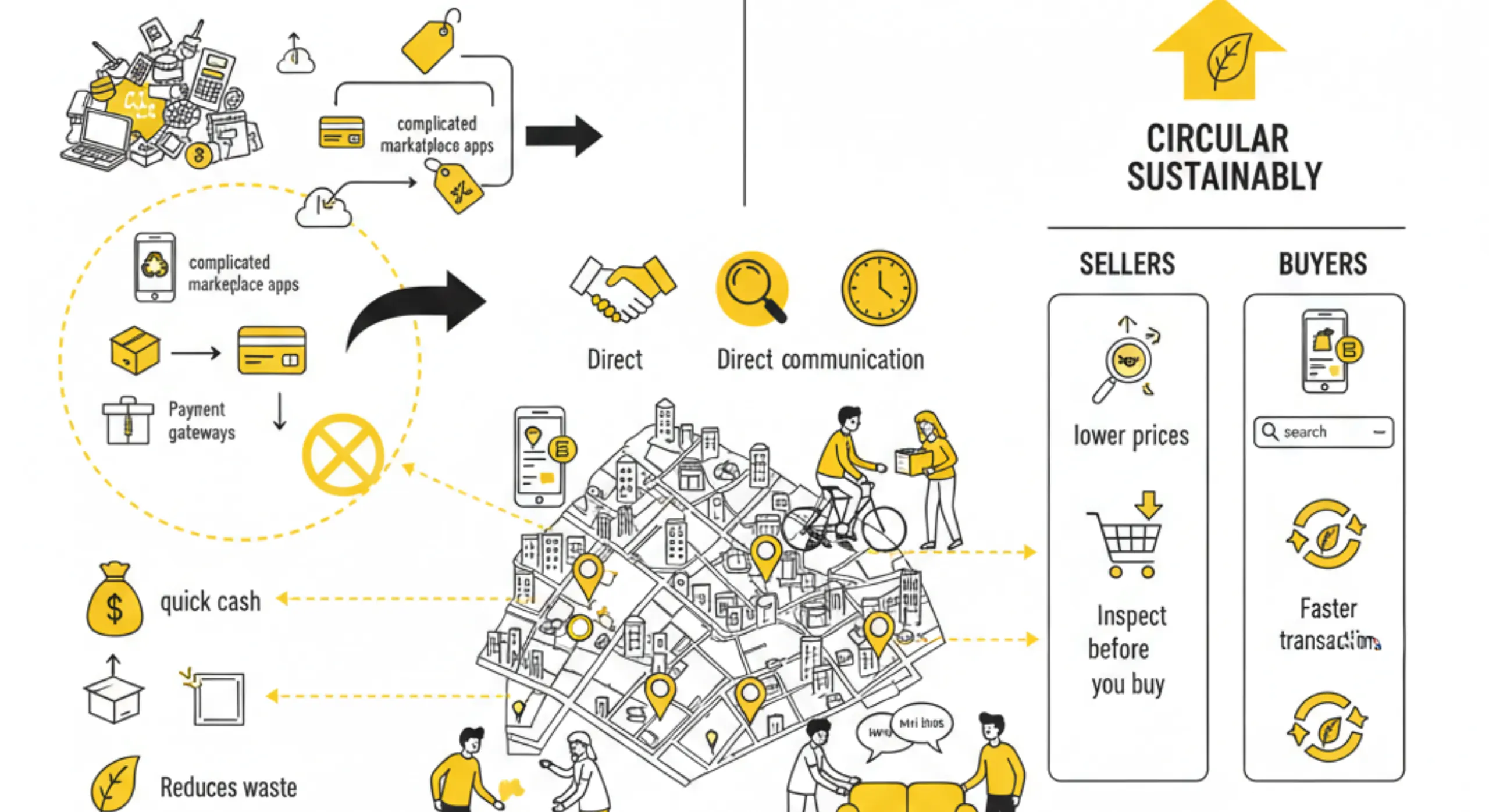
Large marketplaces add layers between buyers and sellers.
Algorithms decide visibility. Paid promotions determine rankings. Logistics partners handle shipping. Payment gateways process transactions.
These systems make sense on a national scale. But they overcomplicate local transactions.
What simple classifieds do differently:
Direct search based on location. You see what’s actually near you. No algorithm deciding what you should see.
Straightforward listings. Item, condition, price, location. No shipping options or delivery estimates cluttering the information.
Person-to-person communication. You message the seller directly. No platform mediating conversations.
In-person transactions. Meet, inspect, pay, collect. Simple and final.
For local buyers and sellers, this stripped-down approach removes obstacles rather than adding features.
The Speed Advantage of Nearby Transactions
Speed matters when you need something or want to clear space.
Large marketplaces introduce delays at every step. Listing approval. Shipping coordination. Delivery scheduling. Return policies.
Local transactions move faster:
Search for a meeting in hours. You find a listing at lunch. Message the seller. Agree to meet after work. See the item the same day.
Decision to purchase in minutes. You inspect the item in person. It’s exactly as described. You decide immediately. No waiting for delivery to evaluate.
Payment to possession instantly. Hand over cash or transfer via UPI. Take the item. Transaction complete.
This speed isn’t just convenient. It solves real problems. Students moving into hostels next week. Families clearing apartments before relocation. People who need a bike for tomorrow’s commute.
Sympl’s local focus enables this speed naturally.
Cost Benefits of Eliminating Shipping and Logistics
Money gets wasted in unnecessary ways on large platforms.
Shipping charges. Packaging materials. Courier insurance. Platform fees covering logistics infrastructure.
How local buying saves money:
No delivery costs. You meet in person. No courier charges eating into the final price.
No packaging expenses. Sellers don’t need boxes, bubble wrap, or protective materials.
No inflated prices covering logistics. Sellers price based on item value, not value plus shipping overhead.
Direct negotiation. Face-to-face price discussions often settle at fair middle ground without platform fees influencing the number.
For low-cost buying, these savings matter. A ₹2,000 item shouldn’t cost ₹2,400 because of delivery charges and packaging.
Local focus keeps transactions clean and costs reasonable.
Why Nearby Buyers Are More Serious
There’s a quality difference in inquiries on local platforms.
On nationwide marketplaces, many messages come from casual browsers. People asking questions with no real intention to buy. Others are fishing for unrealistic deals because they know they won’t actually meet you.
Local buyers behave differently:
They’re searching their area specifically. That indicates intention. Casual browsers don’t narrow searches geographically.
They can inspect items easily. This filters out people who’d back out after seeing photos that don’t match reality.
They face accountability. Meeting someone local feels more real than a distant online transaction. People are more genuine.
They need items now. Someone searching for a fridge in their neighbourhood usually needs one this week, not eventually.
This means sellers on Sympl waste less time with tire-kickers and connect more often with people ready to transact.
The Trust Factor in Local Community Transactions
Trust builds differently when dealing locally.
Large marketplaces try to create trust through ratings, reviews, and verification systems. These help but remain somewhat abstract.
Local transactions create trust through proximity:
Shared geography builds familiarity. You’re both from the same area. That creates baseline comfort.
Face-to-face meetings reveal character. A real conversation tells you more about someone than a five-star rating.
Accountability feels more real. You’re not dealing with an anonymous seller in another state. They’re someone from your neighbourhood.
Mutual acquaintances sometimes emerge. “Oh, you’re near XYZ school? My cousin lives there.” These connections, however small, build confidence.
For first-time buyers and sellers especially, this local trust factor reduces anxiety around transactions.
Who Benefits Most from Locally-Focused Platforms
Certain groups find local platforms particularly valuable.
Students appreciate the simplicity. They’re buying furniture for PG accommodations or hostels. Finding someone in the same college area who’s selling exactly what they need saves time and money.
Families clearing households prefer nearby buyers. Heavy items like beds, sofas, and appliances are impractical to ship. Local buyers can arrange pickups themselves.
Working professionals short on time benefit from efficient local transactions. No coordinating with courier services or waiting for delivery windows. Meet nearby. Complete the deal. Move on.
Budget-conscious buyers find better deals locally. Prices aren’t inflated to cover shipping. Sellers just want fair value for items they no longer need.
People buying bikes or vehicles need local transactions inherently. Test rides, document verification, and RTO transfers all require proximity.
If your needs are local, platforms designed for local connections work better than platforms forcing local transactions into nationwide systems.
What Gets Lost in Large Marketplace Scale
Scale creates advantages. But it also creates distance.
What large platforms sacrifice:
Personal interaction. Automated systems replace human conversations. You’re interacting with policies, not people.
Contextual understanding. A platform serving all of India can’t optimize for local nuances. Traffic patterns. Neighbourhood safety. Area-specific preferences.
Simplicity. More features mean more complexity. Shipping options, payment gateways, return policies all necessary at scale but unnecessary locally.
Direct relationships. You’re a transaction ID, not a person. The buyer is an order number. The human element disappears.
For everyday buying and selling, these losses matter more than scale benefits.
Sympl chooses local depth over national breadth intentionally.
How Local Platforms Handle Practical Selling Challenges
Certain selling challenges exist regardless of platform.
But local focus makes solutions simpler.
Coordinating meetups: Large platforms require detailed shipping addresses and delivery coordination. Local platforms need simple agreements: “Near Indiranagar Metro, Saturday 3 PM.”
Handling bulky items: Nationwide platforms make furniture sales complicated. Local platforms make them natural. Buyers arrange their own pickup or meet with a small vehicle.
Building buyer confidence: Distant platforms rely on detailed photos and descriptions. Local platforms enable in-person inspection, removing doubt entirely.
Closing deals quickly: National shipping timelines stretch transactions over days or weeks. Local meetings compress the entire process into hours.
These aren’t just theoretical advantages. They impact how fast you actually sell items and how satisfied both parties feel afterward.
The Environmental Angle Nobody Talks About
Local buying has an often-overlooked benefit.
No long-distance shipping means reduced carbon footprint. No courier vehicles travelling hundreds of kilometres. No excessive packaging waste.
Someone buying a chair from a neighbour instead of ordering new from another state makes a small environmental difference.
Multiply this across thousands of local transactions, and the impact becomes meaningful.
This isn’t why most people choose local buying. But it’s a genuine positive externality of platforms prioritising proximity over reach.
What This Means for Everyday Transactions
If you’ve been frustrated with large marketplaces for local buying needs, the problem isn’t you.
Those platforms are optimised for different purposes. National retail. Commercial sellers. Small, easily-shipped items.
For selling a bike, clearing furniture, buying appliances, or any transaction where meeting locally makes sense, platforms designed for local connections work better.
Sympl’s local focus isn’t a limitation. It’s a deliberate choice that makes everyday buying and selling simpler, faster, and more practical.
You’re not filtering through irrelevant nationwide listings. You’re seeing what’s actually available nearby. You’re connecting with people you can meet. You’re completing transactions that work for local needs.
No shipping complications. No distant strangers. No unnecessary complexity.
Just straightforward connections between local buyers and sellers who both benefit from proximity.
That’s what sets local-focused platforms apart. Not more features. Not wider reach. But better alignment with how local transactions actually work.