

Most enterprise cloud transformations start with excitement and end with painful conversations about missed deadlines, budget overruns, and compliance gaps that nobody anticipated. If you’re reading this, you’ve probably been in one of those conversations.
The promise of cloud-native architecture is real. Faster deployments, better scalability, lower infrastructure costs. But the path to get there, especially for regulated enterprises operating in India or serving Indian markets, is far more complex than technology vendors suggest.
This article is about what actually happens when large organisations attempt to modernise their systems while meeting stringent compliance requirements. Not the theory, but the reality.
Why Enterprise Cloud Migrations Fail More Often Than They Succeed
Let’s be direct. Most large-scale cloud transformations miss their original timelines by 6 to 18 months. Many exceed their budgets by 40 percent or more. Some get abandoned halfway through.
The reasons are predictable:
Underestimating compliance complexity. When you operate in India, compliance isn’t a checkbox exercise. You’re dealing with data localisation requirements, sector-specific regulations like RBI guidelines for financial services, IRDAI norms for insurance, or DPDPA obligations that are still evolving. Each regulation creates technical constraints that affect architecture decisions, data flows, and vendor choices.
Poor stakeholder alignment from the start. Cloud transformation projects touch every part of the organisation. Technology teams push for modern architecture. Legal and compliance teams worry about regulatory exposure. Finance wants cost predictability. Business units want zero disruption. Without early alignment across these groups, projects stall in endless review cycles.
Weak program governance. Many enterprises treat cloud migration as a technology project when it’s actually a business transformation program. The difference matters. Technology projects need technical leads. Transformation programs need executive ownership, cross-functional governance structures, and accountability frameworks that most organisations don’t build properly.
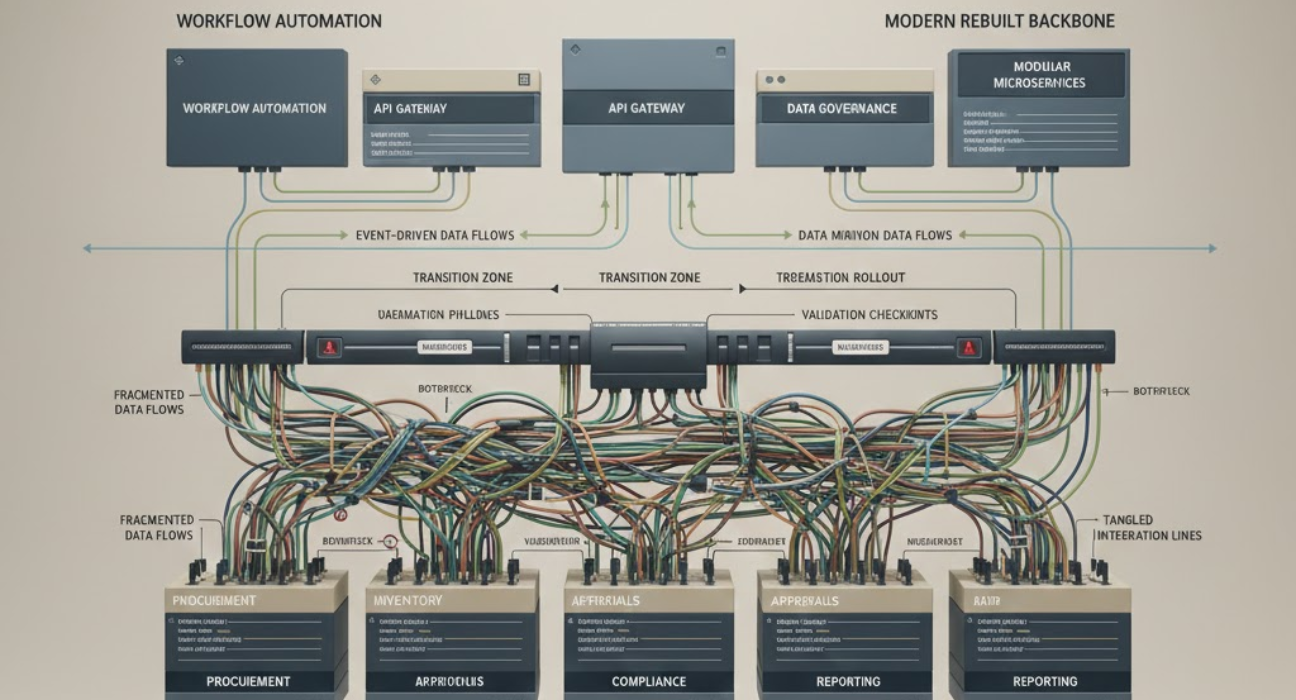
Legacy system dependencies nobody documented. This is the silent killer. You decide to move an application to the cloud, only to discover it has 47 integration points with other systems, half of which aren’t documented and some of which are running on infrastructure nobody remembers commissioning. Untangling these dependencies takes months.
Choosing technology before understanding requirements. There’s tremendous pressure to announce you’re “going cloud-native” or “adopting microservices” or “moving to Kubernetes.” These decisions sound strategic. But if you pick your technology stack before thoroughly understanding your compliance requirements, data sovereignty constraints, and operational maturity, you’ll end up rebuilding everything.
The pattern is consistent across industries. Banks, insurance companies, large retailers, healthcare providers, manufacturing conglomerates, they all face similar challenges when attempting cloud transformation at scale.
What Compliance Actually Means in Practice
Compliance in cloud-native systems isn’t about ticking boxes during an annual audit. It’s about building systems where compliance is embedded in how the system operates, every single day.
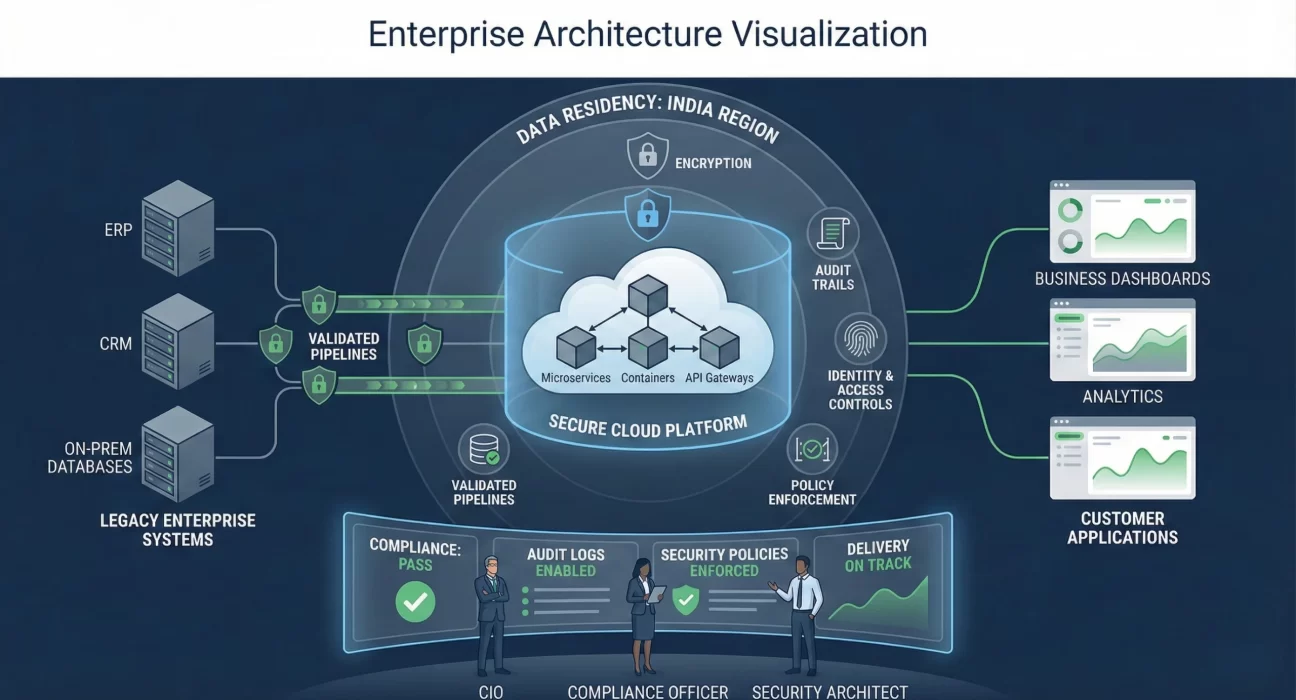
Data residency and sovereignty. For most enterprises with significant operations in India, this is non-negotiable. Customer data, transaction records, and sensitive business information must reside within Indian borders. This affects your choice of cloud regions, backup strategies, disaster recovery locations, and even how you structure your development and testing environments.
Some organisations make the mistake of assuming they can use global cloud services and simply enable “data residency” as a setting. It’s rarely that simple. You need to verify where data moves during processing, where logs are stored, which administrative systems can access your data, and how your cloud provider’s support team operates.
Access controls and audit trails. Regulators want to know exactly who accessed what data, when, and why. In a cloud-native environment with dozens of microservices, hundreds of API calls, and continuous deployments, maintaining comprehensive audit trails requires careful design.
You can’t retrofit this later. Audit logging, identity management, and access control patterns must be part of your core architecture from day one. This includes service-to-service authentication, API security, secrets management, and the ability to trace any data access back to a specific user or system action.
Security by design, not by patch. Traditional enterprise applications had security perimeters you could see and touch. Firewalls, VPNs, DMZs. Cloud-native applications operate differently. Your security perimeter is now distributed across multiple services, managed through code, and changes every time you deploy.
This demands a different approach to security. Infrastructure as code. Automated security scanning. Policy-as-code frameworks. Security testing integrated into your CI/CD pipelines. Many enterprises struggle with this shift because their security teams are structured for perimeter defense, not for DevSecOps.
Change management and regulatory approvals. In regulated industries, you can’t just push code to production whenever you want. Changes often require approval workflows, documentation, and sometimes advance notice to regulators.
Cloud-native practices emphasise continuous delivery and rapid iteration. Compliance requirements demand control and predictability. Reconciling these two isn’t impossible, but it requires mature processes, clear ownership, and tools that can enforce policies automatically.
The Hidden Costs of Getting It Wrong
Beyond missed timelines and budget overruns, there are costs that don’t show up in project reports but affect your organisation deeply.
Regulatory penalties and license risks. Operating non-compliant systems isn’t just a theoretical risk. Regulators are becoming more active. Penalties can be substantial. In some sectors, particularly financial services and healthcare, non-compliance can affect your operating licenses.
Security incidents and data breaches. Poorly designed cloud systems are attractive targets. A security incident in a regulated industry doesn’t just cost money for remediation. It damages customer trust, triggers regulatory investigations, and creates reputational harm that takes years to rebuild.
Technical debt that compounds. When cloud migrations are rushed, teams take shortcuts. Hardcoded credentials. Unencrypted data stores. Services with excessive permissions. Poor monitoring. Each shortcut creates technical debt. That debt compounds. Eventually, you reach a point where your cloud-native system is harder to maintain than the legacy system it replaced.
Team burnout and talent loss. Badly managed transformation programs exhaust your best people. They work long hours to meet impossible deadlines, fight organizational politics, and watch their careful designs get compromised by short-term pressures. Eventually, they leave. You lose institutional knowledge exactly when you need it most.
The real question isn’t whether these problems will happen. In large organisations, they always do. The question is whether you have the maturity to anticipate them and the execution discipline to manage them.
What Actually Makes Enterprise Cloud Programs Succeed
After seeing dozens of large-scale transformations, some patterns separate successful programs from failed ones.
Executive ownership, not just executive sponsorship. Successful programs have a C-level executive who treats the transformation as their personal accountability. Not someone who shows up for steering committee meetings. Someone who removes obstacles, makes tough decisions about priorities, and holds teams accountable for delivery.
This matters because cloud transformation creates conflicts. Business wants features. Security wants controls. Finance wants cost optimization. Without clear executive ownership, these conflicts become political battles that stall progress.
Phased delivery with real milestones. Large-scale cloud migrations can’t be big-bang deployments. Successful programs break the transformation into meaningful phases, each delivering actual business value.
Phase one might be moving non-critical workloads to establish patterns and build team capability. Phase two handles customer-facing applications with strict compliance requirements. Phase three tackles the complex legacy systems everyone’s been avoiding.
Each phase has clear entry and exit criteria. Clear success metrics. Clear accountabilities. And most importantly, each phase teaches you something that improves how you execute the next phase.
Compliance architecture before application architecture. This is counterintuitive for many technology teams, but it’s essential. Before you design your microservices, before you choose your container orchestration platform, before you commit to specific cloud services, you need to design your compliance architecture.
Where will regulated data live? How will you enforce data residency? What’s your audit trail strategy? How will you handle encryption key management? What access control patterns will you use? Once these foundational compliance patterns are clear, application architecture becomes much easier.
Investment in platform engineering. Successful enterprises build internal platforms that make it easy for application teams to deploy compliant cloud-native systems. These platforms embed security controls, compliance requirements, and operational best practices.
Application teams don’t need to figure out how to set up audit logging or configure network security groups correctly. The platform does this automatically. This dramatically accelerates delivery while maintaining compliance.
Partner selection is based on execution maturity, not technology features. Many enterprises choose cloud partners based on technology capabilities or competitive pricing. That’s part of the equation, but it’s not the most important part.
What matters more is whether your partner understands enterprise program execution. Can they manage complex stakeholder environments? Do they have experience navigating regulatory requirements in your sector? Can they deliver in phases while maintaining system stability? Do they know how to work with your existing teams rather than replacing them?
Technology capabilities are table stakes. Execution maturity is what determines success.
The Role of Governance and Accountability
Governance isn’t bureaucracy if done right. It’s how you maintain control and visibility in complex programs without slowing everything down.
Clear decision rights. Who decides on architecture standards? Who approves security exceptions? Who prioritizes which systems get migrated when? These decisions need clear owners. Without clear decision rights, every choice becomes a committee decision, and nothing moves quickly.
Transparent progress tracking. Executives need visibility into program health without drowning in technical details. Good governance provides this through clear metrics that matter. How many applications migrated? Are we meeting compliance requirements? What’s blocking progress? What decisions are needed from leadership?
Risk management that’s honest. Every large program has risks. Political risks. Technical risks. Vendor risks. Timeline risks. Good governance surfaces these risks early, when you can still do something about them. Bad governance hides risks until they become crises.
Vendor accountability frameworks. If you’re working with implementation partners, system integrators, or managed service providers, you need clear accountability frameworks. What exactly are they delivering? By when? With what quality standards? How do you measure their performance?
Too many enterprises sign large contracts with vague deliverables and then struggle to hold vendors accountable when things go wrong.
Making Technology Choices That Last
Cloud-native doesn’t mean you need to use every modern technology that exists. It means making deliberate choices that serve your business needs and compliance requirements.
Cloud provider selection. The major cloud providers have similar capabilities, but they’re not identical. Their compliance certifications differ. Their data center locations differ. Their approaches to data sovereignty differ. Their support models differ.
For enterprises operating in India, you need to evaluate which providers have the strongest commitments to Indian data centers, which have the compliance certifications you need, and which have local support teams that understand Indian regulatory requirements.
Kubernetes or not. Container orchestration platforms like Kubernetes have become almost synonymous with cloud-native. But Kubernetes adds complexity. If your teams aren’t ready for that complexity, or if simpler managed services meet your needs, don’t force Kubernetes adoption just because it’s fashionable.
Managed services versus self-managed. Cloud providers offer managed database services, managed message queues, managed container platforms. These services reduce operational burden but also create vendor dependencies and may have compliance implications you need to evaluate.
The right balance depends on your team’s capabilities, your compliance requirements, and your tolerance for vendor lock-in.
Hybrid versus multi-cloud versus single cloud. Every architecture discussion eventually hits this question. There’s no universal answer. Single cloud strategies are simpler to operate. Multi-cloud strategies provide vendor negotiating leverage but add operational complexity. Hybrid architectures may be necessary if you’re keeping some workloads on-premises.
Choose based on your specific requirements, not based on what sounds most sophisticated.
Building Internal Capability for Long-Term Success
Technology partners can accelerate your transformation, but they shouldn’t own your capability. Successful enterprises use transformation programs as opportunities to build internal skills.
Platform teams. Instead of having every application team solve cloud infrastructure problems independently, create internal platform teams that build reusable solutions. These teams become centers of excellence for cloud-native patterns, compliance automation, and operational practices.
Cloud Centers of Excellence. These groups establish standards, evaluate new technologies, provide training, and support application teams. They’re not approval gates. They’re enablement functions that make it easier for teams across the organization to move to cloud-native architectures successfully.
Security and compliance automation. As your cloud footprint grows, manual security reviews and compliance checks become bottlenecks. Invest in automation that can scan infrastructure code for security issues, verify compliance requirements continuously, and detect configuration drift.
Knowledge transfer from partners. When you work with implementation partners, insist on real knowledge transfer. Not just documentation. Working sessions where your teams learn by doing. Architecture review sessions where your teams understand the reasoning behind design decisions. Post-implementation support where your teams gradually take ownership.
The goal is that your partner makes themselves progressively less necessary, not more necessary.
Working with Enterprise Delivery Partners
Transformation programs of this scale typically require external partners. Not because your internal teams aren’t capable, but because you need additional capacity, specialized expertise, and execution experience.
The challenge is choosing partners who understand enterprise realities.
Some partners are brilliant at technology but struggle with the organizational complexity of large enterprises. They don’t know how to navigate approval processes, manage diverse stakeholder groups, or operate within governance frameworks.
Other partners are excellent at managing programs but lack deep technical expertise. They can run meetings and produce status reports, but they can’t architect compliant cloud-native systems or guide your teams through complex technical decisions.
You need partners who combine both. Companies like Ozrit have built their practice specifically around enterprise program execution, understanding that success isn’t just about technology choices but about managing the entire delivery process in complex organisational environments.
What makes a partner valuable isn’t just their technical credentials. It’s whether they’ve delivered similar programs before. Whether they understand your industry’s regulatory environment. Whether they can work alongside your teams rather than replacing them. Whether they’re transparent about risks and realistic about timelines.
And critically, whether they can transfer knowledge so you’re stronger after they leave than before they arrived.
Measuring Success Beyond Go-Live
Going live with cloud-native systems isn’t the finish line. It’s the starting line for ongoing operations and continuous improvement.
Business metrics, not just technical metrics. Yes, track system uptime and response times. But also track what matters to your business. Are transaction processing costs lower? Can you launch new products faster? Has time-to-market improved? Are you meeting customer service levels better?
Compliance posture over time. Are you maintaining compliance as regulations evolve? Can you respond quickly to new regulatory requirements? Are audit findings trending down? Is your security posture improving?
Team satisfaction and capability. Are your teams more confident working with cloud technologies? Has employee satisfaction improved? Are you retaining key talent? Can your teams operate the systems effectively?
Cost management. Cloud promises cost savings, but costs can spiral without proper governance. Are you tracking cloud spend effectively? Do you understand what driving costs? Can you optimize without compromising functionality?
These metrics tell you whether the transformation delivered real value or just moved problems from one environment to another.
The Path Forward
Building cloud-native systems that meet enterprise compliance standards isn’t a technology problem. It’s an execution problem wrapped in technology.
The technology exists. Cloud providers have mature platforms. Open source tools are abundant. Best practices are well documented.
What’s hard is executing large-scale transformation in complex organizations with multiple stakeholders, competing priorities, legacy constraints, and real regulatory requirements. This requires leadership, governance, experienced partners, and sustained commitment.
It requires accepting that transformation takes time and costs money, but shortcuts cost more. It requires investing in your teams, not just in technology. It requires treating compliance as a design requirement, not as a constraint you work around.
Most importantly, it requires honest assessment of where your organization stands today and realistic planning for how to get where you need to be.
The organisations that succeed with cloud transformation aren’t necessarily the ones with the biggest budgets or the most advanced technology teams. They’re the ones with clear executive ownership, mature governance, realistic timelines, and the discipline to execute consistently over time.
If you’re embarking on this journey, or if you’re midway through and facing challenges, remember that these problems are solvable. Others have navigated this path successfully. The lessons are available. The partners who understand enterprise execution, like Ozrit and others with genuine program delivery experience, can accelerate your progress significantly.
But ultimately, success depends on your organization’s commitment to doing this properly. No partner can save a program that lacks executive ownership, clear governance, and realistic expectations.
The good news is that once you build this capability, once you establish the patterns and processes for delivering cloud-native systems compliantly, each subsequent project becomes easier. You develop institutional knowledge. Your teams gain confidence. Your governance becomes lighter because compliance is embedded in how you work, not bolted on afterward.
That’s when cloud-native transformation delivers its real promise: not just better technology, but better capability to respond to market changes, regulatory requirements, and competitive pressures.
And that’s what actually matters for enterprises competing in today’s environment.