

Every enterprise program starts with optimism. There’s a vision, a budget, a timeline, and a team assembled to make it happen. Then reality sets in.
Six months down the line, scope has expanded, timelines have slipped, key stakeholders are frustrated, and the original plan feels like a distant memory. The technology works in theory, but integration with legacy systems is proving harder than anyone anticipated. Vendor relationships are strained. Risk registers are growing. And somewhere in the middle of all this, the business is still asking: when will we see results?
If this sounds familiar, you’re not alone. These patterns repeat across industries, geographies, and technology stacks. The lessons, however, remain remarkably consistent.
Why Enterprise Programs Are Different
Enterprise-scale initiatives are not simply larger versions of smaller projects. They operate in a different world altogether.
The difference lies in complexity, not just size. You’re dealing with multiple business units, each with their own priorities. You have legacy systems built over decades that can’t simply be switched off. Regulatory requirements vary by region, and compliance isn’t optional. Vendor contracts run into hundreds of pages, and every dependency introduces risk.
Then there’s the human element. Large programs involve dozens, sometimes hundreds, of people across different locations, time zones, and organisational cultures. Alignment is hard to achieve and even harder to maintain. Decision-making slows down as the number of stakeholders grows. And when things go wrong, it’s rarely because of one catastrophic failure. It’s usually a slow accumulation of small missteps.
This is why technology alone never solves enterprise challenges. The hard part is execution.
What Actually Goes Wrong
Having worked across banking, insurance, manufacturing, retail, and public sector programs, certain failure patterns emerge again and again.
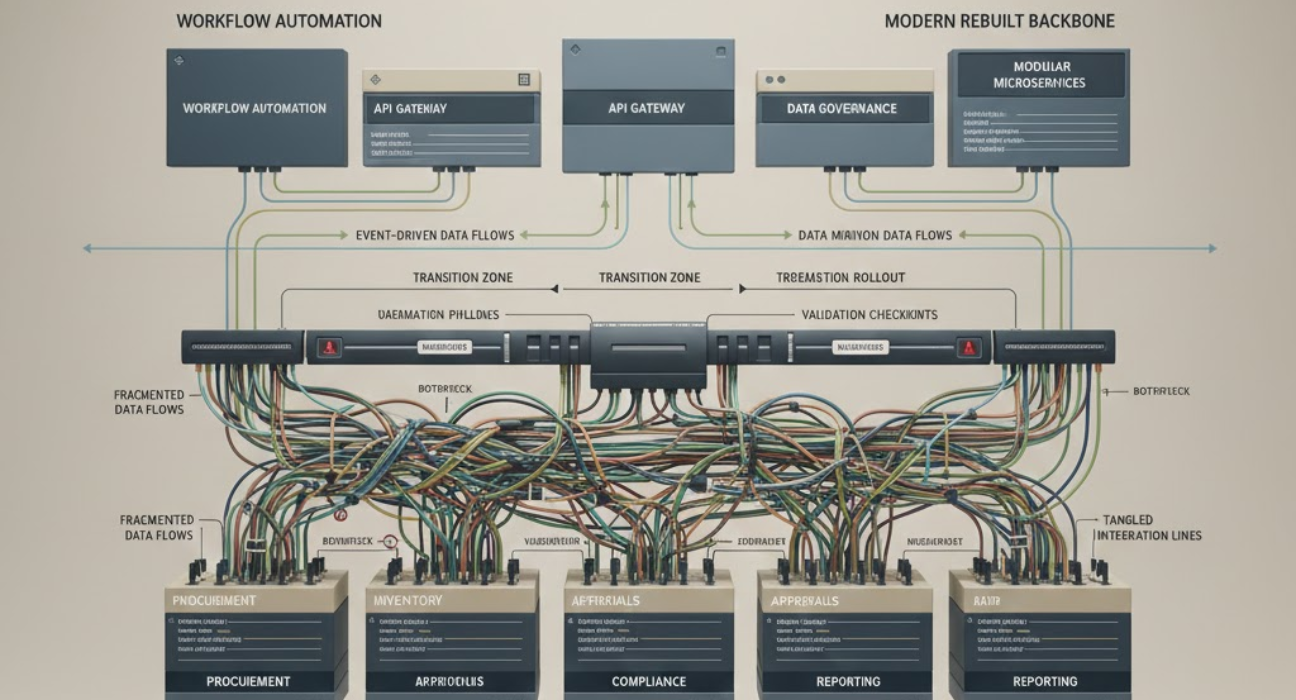
Underestimating integration complexity is perhaps the most common mistake. Every enterprise has accumulated systems over the years. These systems were built by different teams, using different technologies, with different assumptions. Integrating with them is never straightforward. APIs don’t exist where you need them. Data formats are inconsistent. Performance degrades under load. What looked like three months of work on paper becomes nine months in reality.
Weak governance structures are another frequent issue. Governance doesn’t mean more meetings. It means clear decision-making authority, transparent escalation paths, and regular checkpoints that actually drive action. Too often, governance becomes theatre. Status reports are green until suddenly they’re not. Risks are documented but never addressed. And when critical decisions need to be made, no one wants to own them.
Scope creep happens gradually, then suddenly. It starts innocently. A small enhancement here, an additional requirement there. Each one seems reasonable in isolation. But collectively, they derail timelines and budgets. The problem isn’t saying yes to individual requests. It’s the absence of a disciplined change control process that forces trade-offs to be made explicitly.
Vendor relationships often deteriorate as programs progress. This happens when expectations aren’t aligned from the start, when contracts focus more on liability than partnership, or when internal teams treat vendors as order-takers rather than collaborators. The best vendor relationships are built on mutual accountability, not just contractual obligation.
Technical debt accumulates faster than expected. Pressure to meet deadlines leads to shortcuts. “We’ll fix it later” becomes the unofficial motto. But later never comes, and the debt compounds. Six months after go-live, the system is harder to maintain than the one it replaced.
Leadership attention fades over time. In the beginning, executive sponsors are engaged and visible. As the program drags on, other priorities emerge. The team loses air cover. Decisions slow down. And the program becomes just another item on a long list of initiatives competing for attention.
What It Really Takes to Succeed
Success in enterprise programs isn’t about perfect planning. It’s about disciplined execution and the ability to adapt without losing sight of the goal.
Ownership matters more than process. You need someone who wakes up every day thinking about delivery. Not just project management, but true ownership. Someone who understands the business context, can navigate organisational politics, and isn’t afraid to have difficult conversations when things aren’t working. This person needs authority commensurate with responsibility. Too often, program leaders are held accountable for outcomes they don’t have the power to influence.
Governance should enable, not slow down. The right governance structure provides clarity, not bureaucracy. It defines who makes what decisions and how quickly. It surfaces risks early and ensures they’re addressed, not just documented. It creates forums for resolving conflicts, not avoiding them. And it maintains executive engagement throughout the program lifecycle, not just at the beginning and end.
Incremental delivery reduces risk. Breaking large programs into meaningful increments allows you to learn faster, adjust course, and demonstrate value sooner. This doesn’t mean aimless iteration. It means defining a clear end state, then identifying the shortest path to prove the concept works in a real business context. Each increment should deliver something the business can use, even if it’s not the complete vision.
Integration can’t be an afterthought. Plan for it from day one. Understand your technical landscape before you commit to timelines. Invest in good APIs and data architecture. Budget for the unexpected, because integration always surfaces unexpected issues. And test early, not just at the end.
Partnership with the right execution partner makes a difference. Large programs benefit from partners who understand enterprise realities and bring delivery maturity to the table. Not consultants who write recommendations and leave. Not pure development shops that focus only on code. What you need are partners who have lived through the messy middle of enterprise programs and know how to navigate it. Partners who take ownership of outcomes, not just activities.
This is where organisations like Ozrit add value. They work alongside internal teams, bringing execution discipline and technical capability in equal measure. The focus is on delivery, not documentation. On solving real integration challenges, not theoretical ones. On building systems that actually work in production, not just in demos.
The Role of Leadership in Program Success
Executive sponsors often underestimate how much their involvement matters. Your team watches how you engage with the program. If you’re present only in steering committee meetings, they notice. If you defer difficult decisions, they notice. And if your attention is clearly elsewhere, they definitely notice.
Effective sponsorship means being available for critical decisions, removing obstacles the team can’t resolve on their own, and maintaining alignment across business units. It means pushing back when scope creeps without corresponding adjustments to timeline or budget. And it means celebrating small wins along the way, not just waiting for final delivery.
You also need to create space for honest conversations. If people are afraid to surface problems, you’ll only hear about them when it’s too late to fix them. The best program reviews I’ve been part of weren’t the ones where everything was green. They were the ones where teams felt safe discussing what wasn’t working and collaborating on solutions.
Managing Technology Risk and Governance
Technology choices have long-term consequences in enterprise environments. You’re not just building for today. You’re building something that needs to run reliably for years, integrate with future systems you haven’t even planned yet, and be maintained by teams who may not have been involved in the original implementation.
This is why architectural decisions matter. Not in an academic sense, but in a very practical one. Can the system scale when transaction volumes grow? Can it handle failure gracefully? Is it observable, so when things go wrong you can diagnose and fix them quickly? Can new developers understand it without months of knowledge transfer?
Technology governance isn’t about control. It’s about ensuring consistency, managing technical debt, and making sure you’re building on a sustainable foundation. It’s about having standards that make sense, not ones that exist simply because they always have.
Risk management in technology programs is often treated as a compliance exercise. But real risk management means continuously asking: what could go wrong, how likely is it, and what would we do about it? It means having contingency plans for your critical dependencies. It means testing disaster recovery before you need it, not after.
Vendor Management and Partnership Models
Choosing technology partners is one of the most consequential decisions you’ll make in a large program. Yet it’s often done based on incomplete criteria.
Price matters, obviously. But the cheapest option rarely delivers the most value. What you’re really evaluating is capability, cultural fit, and delivery track record. Can they actually do what they claim? Have they successfully delivered programs of similar complexity? Do they understand your industry context? Will they tell you when something isn’t working, or just keep taking orders?
The best partnerships are built on transparency and shared accountability. Your partner should care about your success, not just their revenue. They should be willing to have difficult conversations about scope, quality, or timelines. And they should bring ideas and experience to the table, not just execute your specifications.
Contract structures matter too. Fixed-price contracts sound attractive but often lead to adversarial relationships when requirements evolve. Pure time-and-materials contracts can lack accountability. The right model depends on your specific situation, but it should align incentives and create space for adaptation.
The Reality of Legacy System Migration
Every enterprise eventually faces the challenge of replacing or modernising legacy systems. These systems often run critical business processes. They’ve been customised extensively over the years. Documentation is sparse. The people who built them have long since moved on. And the business depends on them functioning correctly every single day.
Migration is never simple. The new system needs to replicate everything the old one does, often while adding new capabilities. Data migration reveals quality issues that have existed for years. Business rules that were never written down need to be rediscovered and reimplemented. And users who have worked with the old system for a decade resist change, even when the new system is objectively better.
Successful migrations happen incrementally, with clear fallback plans at each stage. You run systems in parallel until you’re confident the new one works. You migrate business processes one at a time, not everything at once. You invest heavily in data validation and reconciliation. And you accept that some things will need adjustment after go-live, because you can’t anticipate everything in testing.
Building for Long-Term Sustainability
Go-live isn’t the end of the program. It’s the beginning of the operational phase, which will last much longer than implementation.
Systems need to be maintainable. Code should be clear, not clever. Documentation should actually exist and be kept current. Monitoring and alerting should be in place before you need them. And the team supporting the system needs proper knowledge transfer, not just a few handover sessions at the end.
Operational costs deserve as much attention as implementation costs. A system that’s expensive to run or difficult to change will become a burden over time. Technical choices that save a few months in implementation but create years of operational pain are false economies.
This is why choosing partners who think beyond implementation matters. Partners who build with maintainability in mind. Who set up proper DevOps practices, not just deploy code. Who train internal teams to own and evolve the system over time.
What Executives Should Look For
When evaluating enterprise programs, certain indicators separate healthy initiatives from troubled ones.
Look at how teams communicate about problems. If status reports are consistently optimistic but private conversations reveal concerns, something is wrong. Healthy programs discuss risks openly and address them proactively.
Look at stakeholder alignment. Are business units pulling in different directions, or is there genuine agreement on priorities? Misalignment doesn’t improve on its own. It requires executive intervention.
Look at the quality of decision-making. Are decisions made promptly and with appropriate information? Or do they get deferred, made in hallways, or reversed repeatedly? Good governance shows up in how decisions actually happen, not just in the structure of meetings.
Look at vendor relationships. Is there genuine collaboration, or is it purely transactional? Are vendors bringing insights and solutions, or just doing what they’re told?
Look at technical quality. Don’t just trust demonstrations. Ask about test coverage, performance under load, security reviews, and disaster recovery plans. Quality reveals itself in the details.
The Path Forward
Enterprise programs will always be complex. That complexity comes from the business environment you operate in, and it won’t go away. But complexity doesn’t have to mean failure.
What matters is approaching these programs with realistic expectations, disciplined execution, and the humility to adapt when things don’t go according to plan. It’s about investing in governance that enables rather than constraints. About choosing partners based on delivery maturity, not just technical skills. About maintaining executive engagement throughout the journey, not just at milestones.
The organisations that succeed with enterprise-scale transformation aren’t necessarily the ones with the biggest budgets or the most advanced technology. They’re the ones that execute well, learn quickly, and maintain focus on business outcomes through all the inevitable challenges.
If there’s one lesson that transcends industries and technologies, it’s this: execution matters more than strategy. A good plan executed well will beat a perfect plan executed poorly every single time. The question isn’t whether you’ll face challenges in your enterprise programs. The question is whether you have the leadership, governance, partnerships, and discipline to work through them.
That’s where the real lessons are learned. Not in the project plans or architecture diagrams, but in the daily reality of delivery. And that’s where partners like Ozrit earn their place, by understanding this reality and helping navigate it successfully.