

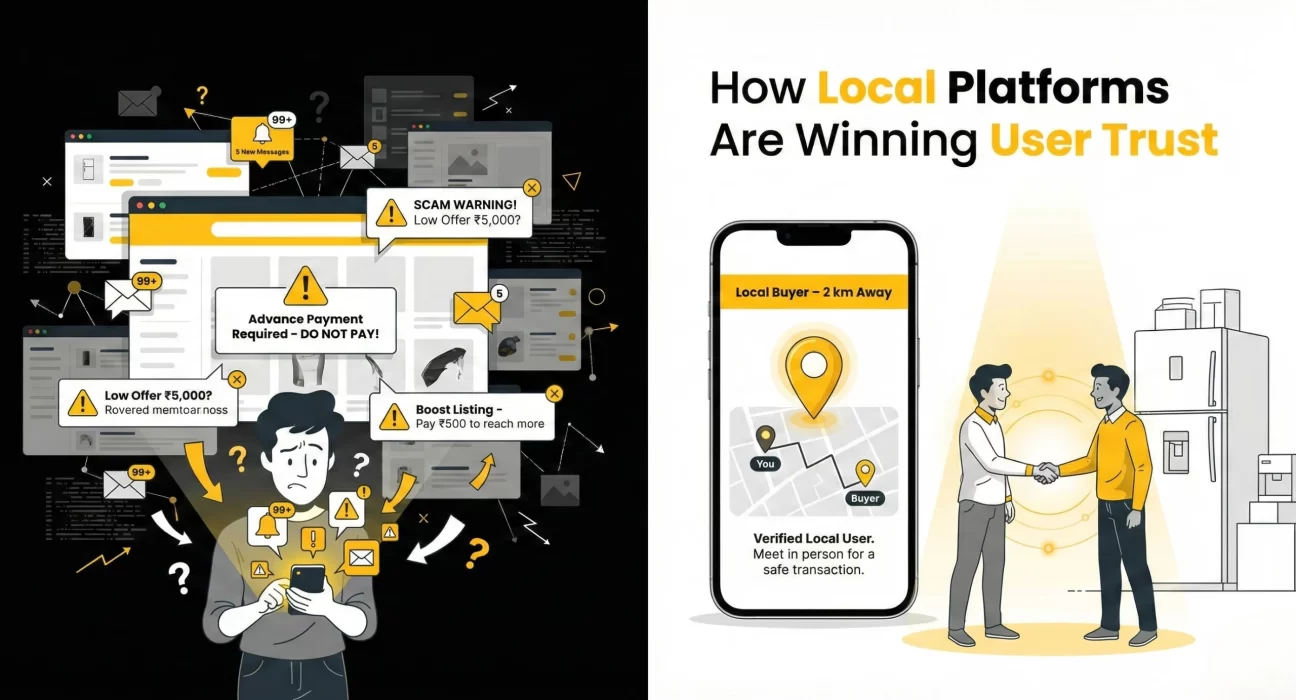
You’ve been trying to sell your old refrigerator on a big marketplace for two weeks. You’ve dealt with dozens of messages from people who never follow through, lowball offers that insult your intelligence, and a few suspected scammers asking for advance payment.
Then a friend suggests you try a local classifieds platform. You list the same fridge, and within two days, someone from your neighborhood visits, inspects it, and buys it at your asking price.
The difference isn’t just speed, it’s the entire experience. The buyer was serious, the conversation was straightforward, and the transaction felt safe because you could meet face-to-face.
This is happening across India. While large marketplaces dominate headlines, local platforms are quietly earning something more valuable: genuine user trust.
When you buy and sell locally through simple classifieds like Sympl, you’re tapping into this shift connecting with nearby buyers and sellers in ways that feel more reliable, transparent, and human than what big anonymous platforms offer.
Why Trust Matters More Than Size
For years, the assumption was simple: bigger platforms are better. More users mean more opportunities, right?
But users have learned that size doesn’t guarantee trustworthiness. In fact, it often creates the opposite problem.
Large platforms struggle with accountability
When a marketplace has millions of users, individual accountability becomes nearly impossible to enforce. Scammers create new accounts daily. Bad actors exploit anonymity. Honest users get lost in the crowd with no way to distinguish themselves. The sheer scale that’s supposed to be an advantage becomes a liability when it comes to trust.
Algorithms replace human judgment
Big platforms rely on automated systems to moderate, rank, and recommend. These algorithms don’t understand context. They can’t tell the difference between a genuine seller and a sophisticated scammer. They prioritize engagement over trustworthiness. Users increasingly feel like they’re interacting with a machine, not a marketplace of real people.
Platform goals don’t align with user needs
Large marketplaces optimize for metrics that matter to them – time on platform, ad revenue, data collection, growth. Users just want to complete transactions safely and efficiently. This fundamental misalignment erodes trust over time.
Bad experiences accumulate and spread
Everyone knows someone who’s been scammed, dealt with a no-show buyer, or received an item nothing like what was advertised. These stories spread. Trust in large anonymous platforms gradually erodes, even for people who haven’t personally had bad experiences.
When you sell items fast through local platforms, you’re benefiting from a different trust model – one built on proximity, transparency, and community accountability rather than algorithmic scale.
What Local Platforms Do Differently
Local classifieds aren’t just smaller versions of big marketplaces. They operate on fundamentally different principles that naturally build trust.
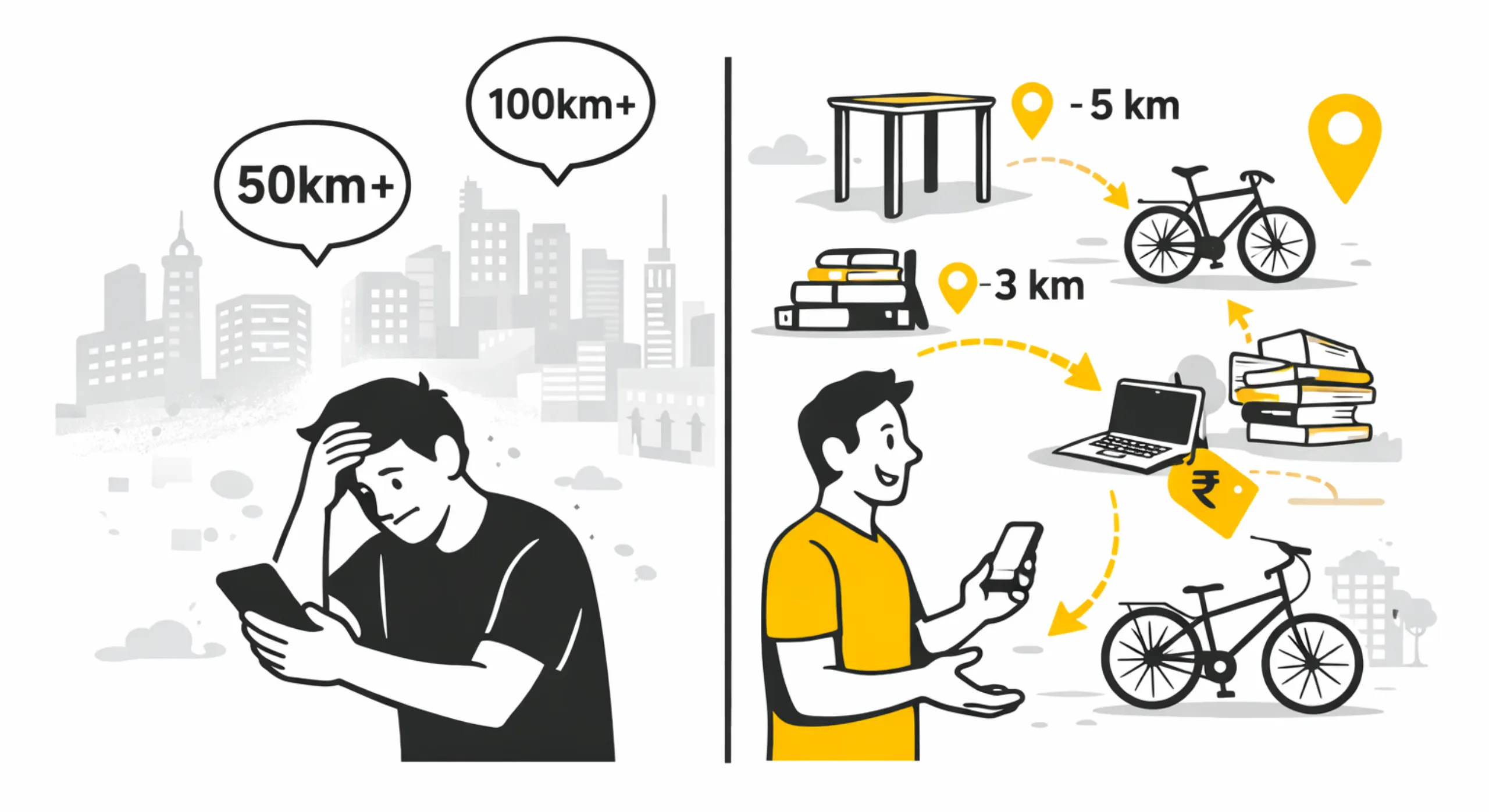
Geographic proximity creates natural accountability
When both buyer and seller are from the same city or neighborhood, there’s built-in accountability that doesn’t exist in anonymous national transactions.
You might have mutual connections. You’re part of the same community, even loosely. This social context discourages bad behavior.
People are simply more honest when they know they might encounter the person again or that their reputation matters in their local area.
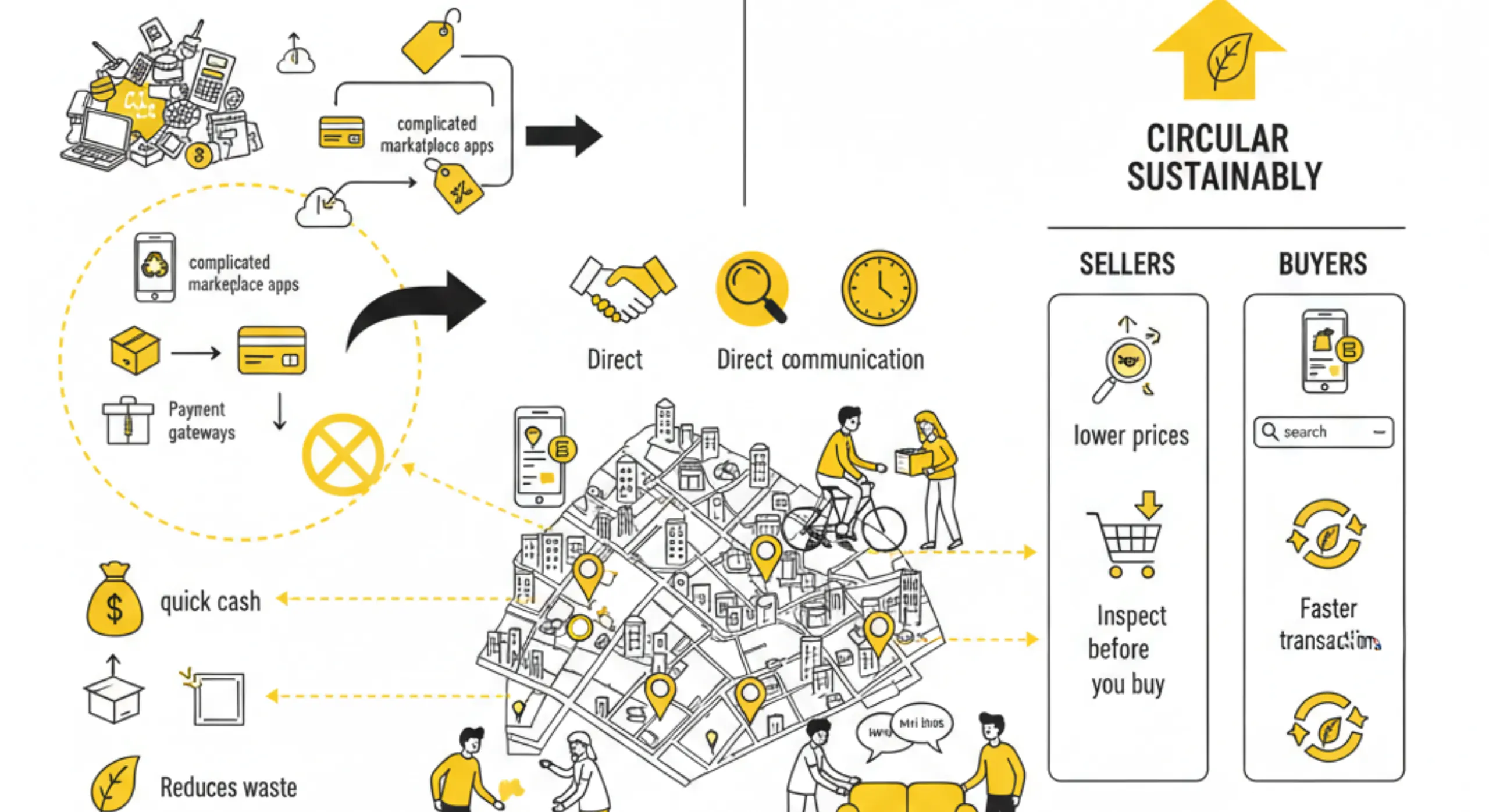
Inspection before purchase is standard
On local platforms, meeting to inspect items before buying isn’t just possible – it’s expected.
This removes the biggest trust barrier in online commerce: uncertainty about whether the item matches the description.
Buyers verify everything themselves. Sellers don’t worry about complaints later. Both sides leave the transaction satisfied because there were no surprises.
Direct communication builds confidence
When you’re messaging directly with someone you’ll meet in person, conversations feel more authentic. There’s less posturing, fewer games, more straightforward communication. You’re both real people coordinating a simple transaction.
This directness builds trust faster than elaborate platform mechanisms or verification badges ever could.
Community size allows real moderation
Local platforms, being smaller and geographically focused, can actually moderate effectively. Problem users get identified and removed. Patterns emerge quickly in smaller communities. Reputation systems work because the user base is manageable.
This is something massive platforms simply can’t achieve at their scale.
Simplicity signals honesty
Local platforms tend to be straightforward – list your item, connect with buyers, complete the transaction. No complex seller dashboards, no promotional upsells, no hidden fees revealed at checkout.
This transparency and simplicity signal that the platform isn’t trying to extract value from users, just facilitate genuine transactions.
Platforms like Sympl embody these principles – keeping things local, simple, and focused on real connections between nearby buyers and sellers.
Practical Examples of How Trust Develops Locally
Trust isn’t abstract. In local transactions, it shows up in specific, observable ways.
The bike seller who welcomes test rides
You’re selling your motorcycle. Instead of making buyers commit without seeing it, you openly invite them to visit and take a test ride. This openness signals confidence and honesty. Buyers appreciate it, and serious ones respond quickly.
The bike sells within days because trust was established upfront.
The furniture buyer who keeps commitments
A buyer messages saying they’ll visit Saturday at 3 PM to see your dining table. They show up exactly on time.
After inspecting, they pay your asking price without excessive haggling because the item was exactly as described.
Both of you leave satisfied. The buyer might remember you for future purchases. You might recommend them to other sellers.
This is how reputation builds in local communities.
The transparent appliance listing
You’re selling a washing machine. Your listing honestly states: “Works perfectly, small dent on side panel (photo 3), 3 years old, selling because upgrading.”
Buyers appreciate the honesty. Instead of trying to hide the dent and having buyers discover it during inspection, you addressed it upfront.
This transparency attracts serious buyers who value honesty over perfection.
The local transaction that becomes a referral
You sell a laptop to someone in your neighborhood. The transaction goes smoothly – clear communication, fair price, item as described.
A month later, they message asking if you have other electronics to sell. They also recommend you to a friend looking for similar items.
This is the compounding value of trust in local transactions.
How Local Buying and Selling Reinforces Trust
The structure of local transactions inherently supports trust in ways that distant, anonymous transactions can’t.
Shared local context creates understanding
When both parties understand the local market – what things cost in your area, neighborhood dynamics, local references – communication is easier.There’s common ground that strangers from different parts of the country don’t automatically share. This shared context reduces misunderstandings and builds rapport faster.
Face-to-face meetings humanize both parties
It’s easier to scam or mistreat someone you’ve never met and never will meet.When you’re meeting face-to-face, both parties are real people with names, faces, and presence. This simple human connection encourages honest behavior.
Reputation matters more in smaller communities
In a marketplace of millions, one bad rating barely matters. You can create a new account and start over.
In local communities, reputation carries real weight. Word spreads. People remember. This creates strong incentives for trustworthy behavior.
Repeat interactions build relationships
On large platforms, most transactions are one-time. You’ll likely never interact with that buyer or seller again.
Locally, you might encounter the same people multiple times – buying different items, selling to repeat customers, seeing them at local meetups or groups.
This possibility of ongoing relationships changes how people behave from the very first interaction.
Local platforms attract users who value trust
People who choose local platforms over large marketplaces are often doing so precisely because they value trustworthy transactions over maximum selection.
This self-selection creates communities of users who share similar values around honesty, directness, and fair dealing.
Cost and Time Benefits of Trust-Based Local Platforms
Faster transactions through reduced friction
When trust is present, buyers and sellers move quickly. No endless verification, no elaborate safety protocols, no constant suspicion.
You list, connect, inspect, buy. Done in days, not weeks.
Better prices for both sides
Sellers don’t need to discount heavily to compensate for buyer uncertainty. Buyers don’t need to lowball to protect themselves from risk.
Fair pricing becomes the norm when trust is established, benefiting everyone.
Lower stress and anxiety
Selling on trusted local platforms feels manageable, even pleasant. You’re not constantly worried about scams, no-shows, or conflicts.
This reduced stress makes the experience worthwhile rather than something to endure.
Time saved on vetting and verification
When the platform structure naturally filters for serious, local, accountable users, you spend less time verifying every inquiry.
You can trust that the buyer who messages is probably legitimate, which saves enormous time and mental energy.
Who Benefits Most from Trusted Local Platforms
Individual sellers uncomfortable with large marketplaces
If big platforms feel overwhelming, impersonal, or risky, local alternatives offer exactly what you need – simplicity, transparency, and human-scale transactions.
Buyers tired of disappointments
If you’ve been burned by items not matching descriptions or sellers disappearing, local platforms with inspection-before-purchase restore confidence.
Families and parents making practical purchases
When buying items for kids or home, trust matters more than getting the absolute cheapest price. Local platforms connect you with reliable sellers where you can verify quality before purchasing.
Small local businesses building community presence
Businesses that serve local customers benefit from platforms that emphasize local connections and community trust.
Anyone valuing straightforward, honest transactions
Whether buying or selling, people who prefer directness over anonymity, community over scale, and trust over algorithmic matching find local platforms more aligned with their values.
Conclusion:
Large platforms achieved scale quickly by making signup and listing as frictionless as possible. Anyone could join, no questions asked. This worked for growth but undermined trust. Local platforms grow more slowly because they’re built on different foundations – community, accountability, transparency, real relationships.
This slower growth is actually their strength. Users who join are choosing the platform specifically for its trust-based approach. When you buy and sell locally through platforms like Sympl, you’re part of this shift – away from anonymous scale and toward trusted community connections.
You’re prioritizing quality of interaction over quantity of options. Real accountability over algorithmic ranking. Human judgment over automated systems. These choices don’t just make individual transactions better – they create marketplaces that are fundamentally more trustworthy for everyone involved.
Trust isn’t built through fancy features or aggressive marketing. It’s built through consistent experiences where sellers are honest, buyers follow through, transactions complete smoothly, and people treat each other with basic respect and fairness.
That’s happening on local platforms across India. Quietly, steadily, one successful transaction at a time.