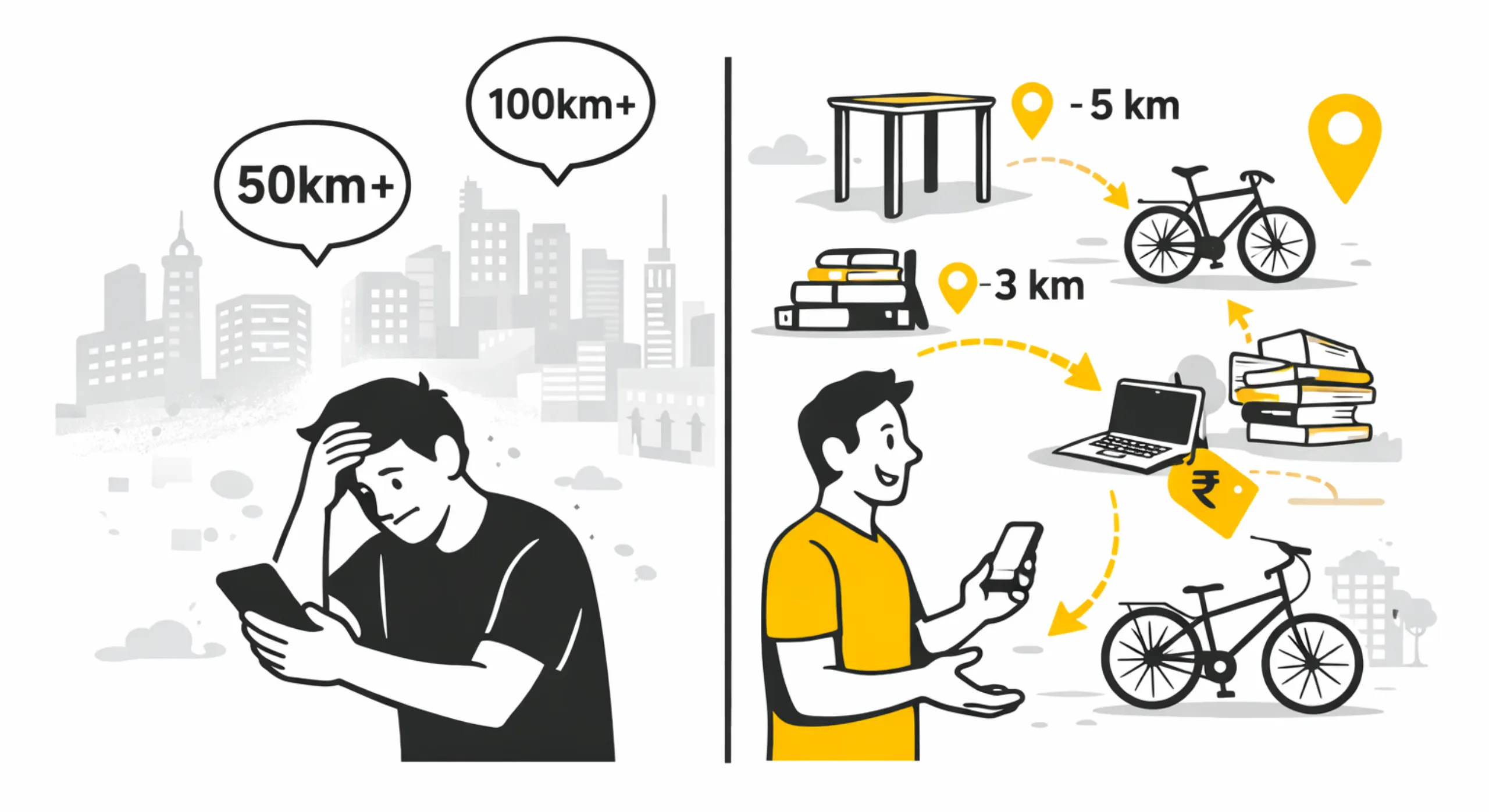


You’re selling a laptop in a metro city dozens of online platforms compete for your attention, promising reach, features, and quick sales. You list it, get buried under professional listings, and spend days managing enquiries from across the country.
Meanwhile, your cousin in a smaller town posts a similar laptop. They get fewer enquiries but connect through local networks WhatsApp groups, word-of-mouth, or simple local classifieds. Within a week, they sold it to someone from the next neighborhood who came, checked it, and bought it.
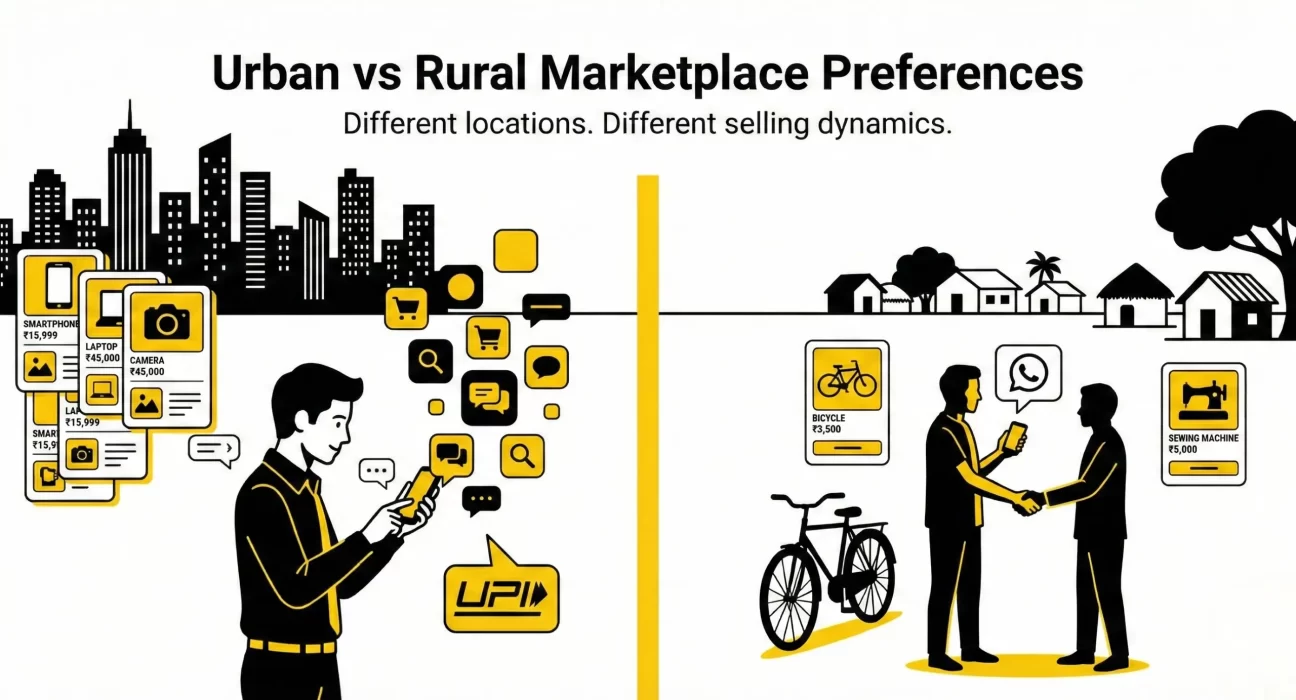
This difference reflects deeper patterns in how urban and rural India approaches buying and selling. Cities have platform abundance but noise and complexity. Smaller towns and rural areas have simpler, more direct transaction cultures that often work faster despite less digital infrastructure.
Understanding these preferences helps you choose the right approach for where you live and what you’re selling.
How Urban Marketplaces Function
Metro cities and large urban centers have specific marketplace characteristics.
Platform saturation: Multiple apps, websites, and marketplaces compete for users national platforms, social media marketplaces, city-specific sites, category-focused apps.
High competition: Thousands of listings for similar items your sofa competes with hundreds of others in the same city.
Professional seller presence: Many businesses operate as individual sellers, making competition harder for actual individuals.
Digital payment expectation: Urban buyers often prefer UPI, cards, or digital wallets over cash.
Privacy consciousness: People prefer platform chat over sharing phone numbers initially, protecting personal information.
Time scarcity: Busy professionals want quick, efficient transactions without lengthy coordination.
Geographic spread: Even within one city, traveling across town for pickup can take an hour or more.
These factors create both opportunities and challenges for urban selling.
How Rural and Small-Town Marketplaces Work
Smaller towns and rural areas have different transaction dynamics.
Limited platform penetration: Fewer people use specialized selling apps; WhatsApp, Facebook, and local networks dominate.
Community-based selling: Word-of-mouth, local Facebook groups, or community WhatsApp groups often work better than formal platforms.
Trust through proximity: Everyone knows someone who knows someone, creating social accountability.
Cash dominance: Digital payments exist but cash remains preferred for local transactions.
Simpler expectations: Less demand for professional photos, detailed descriptions, or immediate responses.
Limited competition: Fewer sellers mean your listing stands out more easily.
Smaller geographic areas: Entire towns are accessible within minutes, making coordination simpler.
Personal relationships: Transactions often happen between acquaintances or through personal networks.
Understanding these differences helps adapt selling strategies to your location.
Items That Sell Differently in Urban vs Rural Markets
Certain categories have different demand patterns by location.
Urban Areas See More Demand For:
Electronics and gadgets: Laptops, phones, cameras, gaming consoles tech adoption is higher in cities.
Fitness equipment: Gym gear, cycles, yoga mats urban fitness culture drives demand.
Professional furniture: Office chairs, study desks, ergonomic items for work-from-home setups.
Branded and fashion items: Higher brand consciousness and disposable income.
Specialized hobby items: Photography equipment, musical instruments, art supplies.
Rural and Small-Town Areas See More Demand For:
Agricultural equipment: Tools, irrigation supplies, farming implements.
Basic household items: Practical furniture, essential appliances, cooking equipment.
Vehicles for daily use: Bikes and scooters for commuting, not premium or sports models.
Durable, functional items; Quality matters more than brand or aesthetics.
Bulk or wholesale items: Larger quantities of basic goods purchased together.
These patterns reflect different lifestyles, priorities, and economic contexts.
Platform Preferences: Where People Actually Sell
Different locations gravitate toward different platforms.
Urban Platform Preferences:
Dedicated classified sites: In cities like Hyderabad, the best classified sites in Hyderabad include both national players and local-focused platforms that understand the city’s specific market.
Category-specific apps: Platforms focused on vehicles, electronics, or fashion see good urban adoption.
Social media marketplaces: Facebook Marketplace is popular but competes with many other options.
Hyperlocal apps: Platforms like Sympl that focus on city-specific transactions gain traction for their relevance.
Rural Platform Preferences:
WhatsApp groups: Community groups organized by locality, profession, or interest.
Facebook pages and groups: Local buy-sell groups specific to town or district.
Direct messaging: SMS and calls remain more common than app-based chat.
Traditional methods: Physical notice boards, local newspapers, word-of-mouth still relevant.
Simple classified sites: Platforms with minimal friction and easy phone contact work better than complex apps.
Understanding where your potential buyers actually look is crucial for successful selling.
Trust Building: Different Approaches
How trust develops varies significantly by location.
Urban Trust Development:
Platform reputation: People trust established platforms with reviews and ratings.
Profile verification: Badges, ratings, and transaction history create confidence.
Public meeting spots: Cafes, malls, or metro stations for neutral territory.
Platform dispute resolution: Reliance on formal systems to handle problems.
Digital evidence: Chat logs, transaction records valued for accountability.
Rural Trust Development:
Personal networks: “I’m Ramesh’s cousin” or “I live near the temple” establishes credibility.
Community reputation: People ask around about sellers before buying.
Known landmarks: Meetings at well-known local spots everyone recognizes.
Family involvement: Often family members accompany transactions, adding social weight.
Repeat interactions: Same buyers and sellers trade multiple times, building relationships.
Both approaches work they’re just adapted to different social contexts.
Communication Styles That Work Better
Messaging and coordination differ between contexts.
Urban Communication:
Brief, efficient messages: Busy people prefer quick, to-the-point conversations.
Scheduled meetings: Specific times and dates planned in advance.
Platform chat preferred initially: Privacy protection before sharing phone numbers.
Google Maps locations: Pinned locations for exact meeting spots.
Professional tone: Formal language and structured communication.
Rural Communication:
Conversational, relationship-building: Taking time to establish rapport before business.
Flexible timing: “Tomorrow afternoon” instead of “Saturday 3 PM.”
Phone calls preferred: Voice communication over text for clarity and trust.
Landmark-based directions: “Near the post office” instead of GPS coordinates.
Personal tone: Friendly, informal language that reflects community culture.
Matching communication style to context improves transaction success.
Price Expectations and Negotiation
Pricing dynamics vary significantly.
Urban Pricing:
Research-based pricing: People check multiple platforms to gauge market rates.
Less aggressive negotiation: Many buyers pay asking prices if they seem fair.
Brand and condition premiums: Willingness to pay more for quality or brands.
Quick decision-making: Less time spent negotiating, more yes/no decisions.
Digital payment readiness: Can transfer exact amounts easily.
Rural Pricing:
Community price awareness: Everyone knows roughly what things cost locally.
Negotiation expected: Bargaining is part of the culture, not seen as rude.
Functional value focus: Care more about whether it works than brand name.
Extended negotiation: Taking time to reach mutually acceptable prices.
Cash transactions: Round numbers preferred for easier cash handling.
Understanding these expectations helps price and negotiate effectively.
What Works Best Where
Practical strategies tailored to location.
For Urban Selling:
Use multiple platforms: List on 2-3 platforms to maximize relevant exposure.
Professional presentation: Clear photos, detailed descriptions work better.
Quick responsiveness: Reply fast to stay competitive.
Flexible meeting locations: Suggest multiple convenient spots.
Digital payment options: Be ready for UPI or other cashless methods.
Clear pricing: Research market rates and price competitively but fairly.
For Rural/Small-Town Selling:
Leverage personal networks: Use community WhatsApp groups and local connections.
Simple listings: Basic photos and honest descriptions are sufficient.
Phone contact prominent: Make it easy for people to call you directly.
Flexible timing: Be available for meetings at various times.
Cash readiness: Have change and be prepared for cash transactions.
Local landmark references: Use well-known spots for meeting coordination.
Adapting strategy to location improves results dramatically.
Real Comparison: Selling a Bike
Two people selling similar bikes in different locations.
Metro City (Hyderabad) Experience:
- Listed on multiple platforms including best classified sites in Hyderabad
- Competed with 100+ bike listings in the city<
- Got enquiries from across the city, many from resellers
- Met three serious buyers at metro station parking lots
- Negotiated based on market comparison from platform research
- Accepted UPI payment
- Sale completed in 8 days
- Process was efficient but required platform navigation skills
Small Town Experience:
- Posted in local WhatsApp group and told a few neighbors
- Only 5-6 bikes being sold in town currently
- Got enquiries through phone calls from people who’d heard about it
- Met two buyers at the local market
- Negotiated over tea at a nearby shop
- Cash payment, exact change wasn’t necessary
- Sale completed in 6 days
- Process was relationship-based and community-oriented
Both successful, but fundamentally different in approach and experience.
Technology Adoption Differences
Digital comfort levels affect platform choices.
Urban Tech Comfort:
- Most users navigate apps easily
- Comfortable with app-based chat, digital payments, location sharing
- Expect modern interface and features
- Quick to adopt new platforms
Rural Tech Patterns:
- Varying comfort levels with smartphone apps/li>
- Prefer familiar tools like WhatsApp and phone calls
- Value simplicity over features
- Slower to try new platforms but loyal once comfortable
Platforms succeeding in both contexts often offer multiple communication methods—app chat, SMS, and direct calls.
Who Benefits from Each Approach
Different user groups thrive in different contexts.
Urban Marketplace Advantages For:
Tech-savvy users comfortable navigating multiple platforms Young professionals who value efficiency and speed People with specialized items needing specific buyer audiences Privacy-conscious sellers preferring platform intermediation Those with flexible schedules for meeting across the city.
Rural Marketplace Advantages For:
Community-connected individuals who can leverage personal networks Older users more comfortable with traditional communication. People selling common, practical items with broad local appeal Those valuing personal interaction over anonymous transactions. Sellers preferring relationship-based trust over platform reputation.Most people in either context can adapt, but natural preferences often align with location.
The Hybrid Approach for Tier 2 Cities
Medium-sized cities often blend both patterns.Platform variety exists but less saturated than metros Community networks still strong but digital adoption growing Mix of buyer types from very tech-savvy to traditional Both cash and digital payments accepted without strong preference Cities like Jaipur, Chandigarh, Nagpur, Coimbatore see successful selling through both formal platforms and community networks, often simultaneously.
How Simple Classifieds Serve Both Contexts
Platforms like Sympl work across urban and rural settings by focusing on fundamentals. Simple interface works for all tech comfort levels Phone number visibility satisfies rural direct-call preference while offering app chat for urban users.
Local focus serves both community-based rural selling and city-specific urban needs No complex features means accessible regardless of digital literacy Minimal barriers to listing and browsing work everywhere. This simplicity makes the platform relevant whether you’re in a metro or small town.
Conclusion:
Urban and rural marketplace preferences differ significantly, but both share a common thread: people want to buy and sell locally in ways that feel natural for their context.
Cities need platforms that cut through noise and competition, connecting nearby buyers and sellers efficiently despite the urban rush. Towns and rural areas need platforms that work with community trust networks and simpler communication preferences.
The best approach isn’t choosing urban versus rural methods, it’s understanding which context you’re operating in and adapting accordingly. Use the platforms, communication styles, and transaction methods that match your location’s culture.
For students, families, and working professionals across India’s diverse geography, simple classifieds offer the flexibility to work both ways supporting app-based efficiency when that’s preferred, and enabling direct phone contact and relationship-based selling when that fits better.
Whether you’re in a Hyderabad high-rise or a Punjab village, the goal is the same: connect with nearby people who want what you’re selling, transact fairly, and move on with your life without unnecessary complications.