

You need to sell your old washing machine before your new one arrives next week.
Ten years ago, you would’ve posted on a classifieds site, got a few calls, and sold it within days.
Five years ago, you listed on a large marketplace, navigated through category selections, shipping options, payment gateways, and promotional features. After days of confusing messages from people across the country, you gave up and stored it in your building’s basement.
Now, you’re back to something that looks like those old classifieds but works on your phone. You post two photos, basic details, and your neighbourhood. Someone nearby calls within hours. They visit, inspect, and buy it the next day.
Classifieds never went away. They just got buried under complicated marketplace features that most people didn’t need. Platforms like Sympl are bringing them back because people want to buy and sell locally without the complexity that modern platforms added.
What Happened to Simple Buying and Selling
Classifieds used to be straightforward: describe what you’re selling, list a price, provide contact details. Buyers called if interested.
Then large marketplaces emerged. They promised better experiences through technology: recommendation algorithms, seller ratings, payment protection, shipping integration, buyer guarantees.
These features made sense for ecommerce buying new products from professional sellers shipping nationwide.
But they created unnecessary friction for local transactions between regular people.
Listing became complicated
Instead of “Washing machine, ₹8,000, good condition, call me,” platforms demanded category trees, condition ratings, brand models, specifications, shipping preferences, payment methods, and return policies.
Communication got restricted
Direct phone numbers disappeared. Everything routed through platform messaging systems with delays, notifications, and apps that needed constant checking.
Fees appeared
Free classifieds became paid promotions. Success fees, listing fees, featured placements—costs that made sense for professional sellers but frustrated individuals selling one item.
National reach replaced local focus
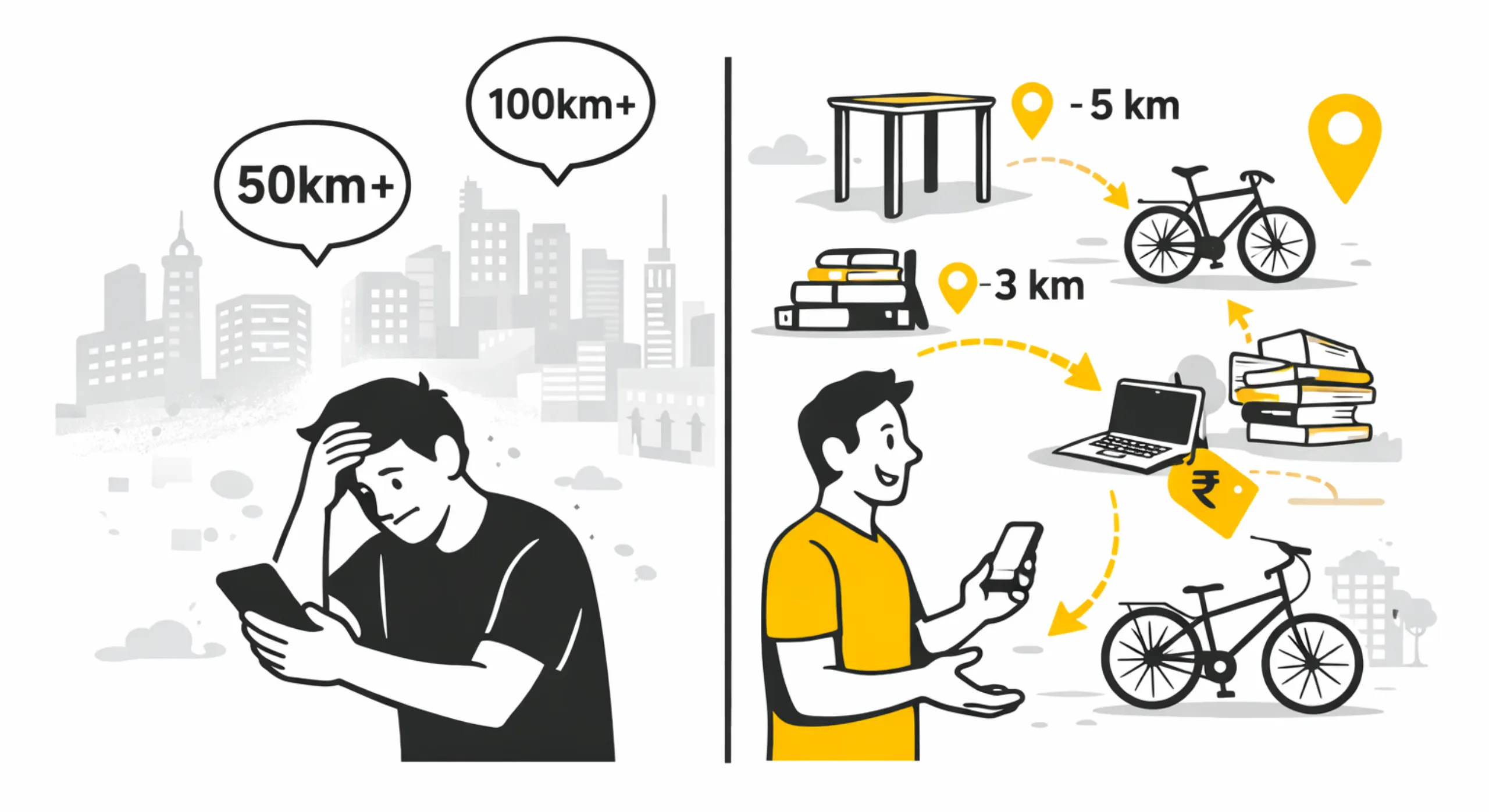
Your listing went to the entire country instead of your neighbourhood. You got messages from people 500 kilometres away asking if you’d ship a refrigerator.
Complexity increased
Every feature added however well-intentioned made the process heavier, slower, and more confusing for everyday users.
People didn’t want sophisticated marketplaces for selling their old bikes. They wanted the simplicity of classifieds. And now they’re finding it again.
Why Simple Classifieds Work for Everyday Items
Most things people buy and sell don’t need marketplace infrastructure.
A student selling textbooks doesn’t need shipping integration. A family selling a dining table doesn’t need payment gateways. A professional selling a laptop doesn’t need algorithmic visibility.
They need to connect with someone nearby who wants what they’re selling.
Minimal listing requirements
Name the item, set a price, add a photo or two, mention your location. Done in under a minute.
Direct contact
Buyers call or message via WhatsApp. Real conversations happen immediately without platform intermediaries.
Local visibility
Your listing reaches people in your neighbourhood who can actually come see the item and complete the transaction.
No hidden costs
List for free. Sell without commissions. Keep the full amount you negotiated.
Face-to-face transactions
Meet locally, inspect in person, pay directly. The way people have bought and sold second-hand items for centuries.
This simplicity is why modern classifieds like Sympl are gaining users. They removed everything that didn’t directly help connect local buyers and sellers.
Real-Life Examples of Classified Usage Today
Student selling college books
Rohan finishes his semester and wants to sell engineering textbooks. He opens Sympl, snaps photos of the book covers, lists them with basic details and his college area. Three juniors contact him via WhatsApp within a day. He meets them between classes, sells all the books in two days.
Family upgrading furniture
The Patels bought a new sofa and want to sell the old one. They post it with photos and their locality. A young couple furnishing their first home sees it, calls that evening, visits the next day, and takes it. Transaction complete in 48 hours.
Professional selling a laptop
Neha upgrades her laptop for work. She lists the old one during lunch break model, specs, price, neighbourhood. Someone working nearby messages within an hour, meets her at a café after office, tests the laptop, and buys it. Total time from listing to sale: six hours.
Parent buying children’s items
Anjali needs a study table for her daughter. She browses local furniture listings while waiting for school pickup. Finds one nearby, calls the seller, arranges to see it over the weekend, and completes the purchase. Cost: half of what a new table would cost.
These aren’t exceptional stories. This is how local buying and selling works when platforms stay simple.
How Modern Classifieds Differ from Old Ones
Today’s classifieds keep the simplicity but add mobile-era conveniences.
Mobile-first design
Post from your phone in seconds. Browse while commuting. Coordinate via WhatsApp. Everything happens on the device you already carry.
Location awareness
GPS shows what’s near you automatically. No manually searching by area codes or neighborhood names.
Photo uploads
Direct camera integration. Take photos and upload immediately without downloading and editing.
Instant notifications
Know when someone messages about your item. Respond while they’re still interested.
Clean interfaces
Modern design that’s easy to navigate. Large photos, clear text, simple actions.
WhatsApp integration
Message sellers through the app you already use daily. No learning new messaging systems.
Platforms like Sympl combine the directness of old classifieds with the convenience of mobile technology without the complexity of full marketplaces.
Why People Prefer Classifieds Over Marketplaces
The shift back to classifieds isn’t nostalgia. It’s practical.
Speed matters
List and sell within days instead of weeks. No waiting for listings to get approved, promoted, or discovered.
Control over transactions
You decide who to respond to, when to meet, and what price to accept. No platform dictating terms.
Lower friction
Fewer steps between deciding to sell and actually selling. Every removed step increases completion rates.
Transparency
What you see is what you get. No algorithm determining visibility. No hidden ranking factors.
Cost savings
No fees eating into your sale price. No pressure to pay for promotions to get basic visibility.
Natural interactions
Talk to buyers like humans, not through formal platform protocols. Build trust through conversation.
For everyday users who sell items fast occasionally, classifieds match their needs better than platforms built for professional sellers.
The Cost Benefits of Simple Transactions
Complex platforms create hidden costs. Simple classifieds eliminate them.
No listing fees
Post as many items as you want without paying per listing or subscription fees.
No success commissions
When you sell for ₹5,000, you keep ₹5,000. No platform taking a percentage.
No promotional costs
Your listing gets seen locally without needing to pay for featured placement or ads.
No shipping expenses
Everything local means no courier charges, no packaging costs, no delivery fees.
No payment gateway charges
Cash or direct UPI transfers avoid the cuts that payment processors take.
Better prices for buyers
Sellers can price lower when they’re not accounting for platform fees. Buyers benefit from these savings.
For low-cost buying and selling, these eliminated costs make real differences. A ₹3,000 item stays ₹3,000 instead of becoming ₹3,500 after various fees.
Who’s Returning to Classifieds
Students
Constantly buying and selling textbooks, electronics, furniture. Need quick, free platforms that work from their phones.
Families
Selling children’s outgrown items, old appliances, furniture when upgrading. Appreciate simplicity over features.
Working professionals
Limited time for complex processes. Want to list quickly during breaks and sell without ongoing management.
Senior citizens
Prefer straightforward interfaces reminiscent of traditional classifieds over confusing modern marketplaces.
First-time sellers
People who’ve never sold online before find classifieds less intimidating than feature-heavy platforms.
Budget-conscious buyers
Looking for affordable second-hand items nearby without inflated prices from shipping and fees.
Environmental advocates
Prefer extending item lifecycles through local reuse rather than disposal and new purchases.
Anyone prioritizing simplicity, speed, and local transactions benefits from modern classifieds.
How Local Focus Makes Everything Easier
Classifieds work better when they’re neighborhood-focused, not nationwide.
Relevant results
See only items you can actually access. No scrolling through listings from cities you’ll never visit.
Serious buyers
People messaging are nearby and can complete transactions. Fewer tire-kickers from distant locations.
Quick coordination
“Can you meet this evening?” works when both parties are local. Impossible when separated by hundreds of kilometres.
Trust through proximity
Meeting face-to-face in familiar areas builds confidence. Local accountability discourages scams.
No logistics complications
Everything happens within a few kilometres. No coordinating shipping, no tracking courier status.
When you buy and sell locally through platforms like Sympl, proximity removes most friction that makes online transactions difficult.
The Mobile Revolution Enabled This Shift
Smartphones made modern classifieds possible.
Everyone has one
No need for computer access. List and browse from the device already in your pocket.
Camera always available
Take photos the moment you decide to sell. No downloading from cameras or editing on computers.
Location services built-in
GPS automatically shows what’s near you. Manual location entry unnecessary.
Messaging apps integrated
WhatsApp calls and messages happen with one tap. No downloading special apps.
Instant connectivity
Post now, get responses within hours. The speed mobile enables matches modern expectations.
Works anywhere
Browse during commutes, list during breaks, coordinate while running errands. Phone-based platforms fit modern lifestyles.
This mobile-first reality makes simple classifieds more powerful now than they were in the pre-smartphone era.
What Changed: Then vs. Now
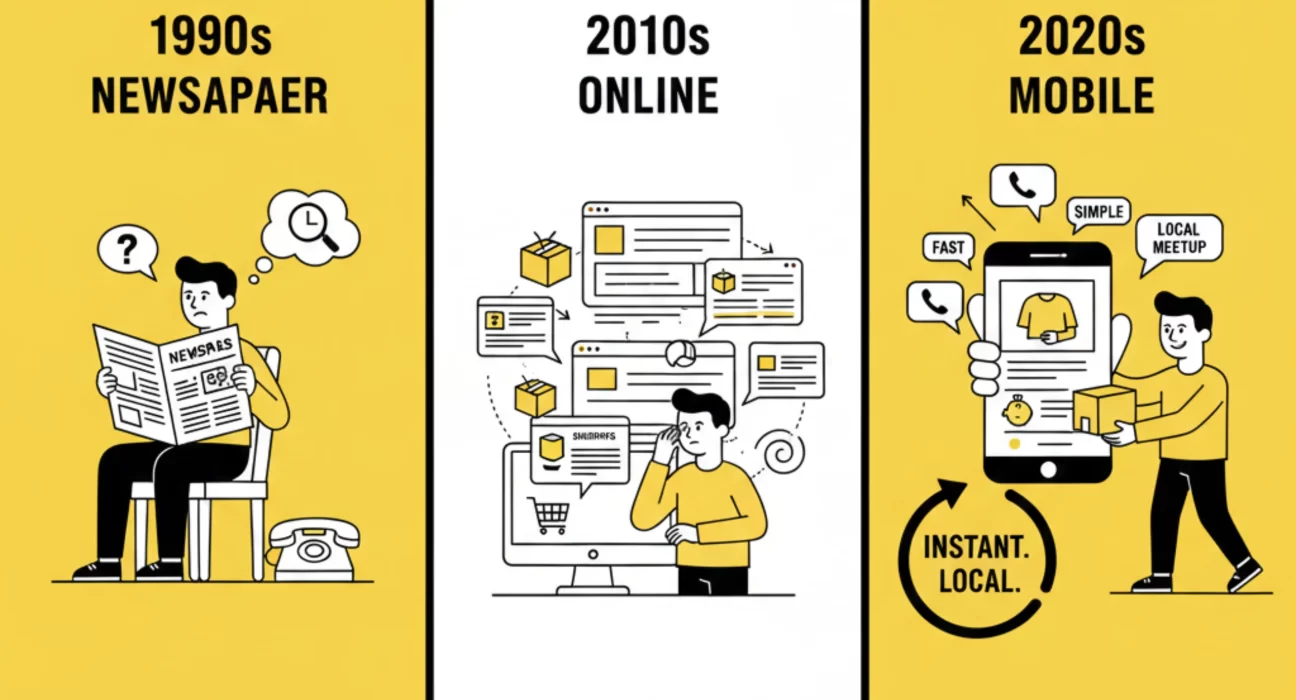
Newspaper classifieds (1990s-2000s)
Submit text ad → Wait for publication → Receive calls → Meet and sell. Simple but slow.
Online marketplaces (2010s)
Create account → Navigate categories → Fill detailed forms → Upload photos → Wait for visibility → Manage messages → Coordinate logistics → Deal with fees. Fast but complex.
Modern classifieds like Sympl (2020s)
Open app → Snap photo → Add basic details → Post instantly → Get direct calls/messages → Meet locally → Sell quickly. Fast and simple.
The latest evolution combines the directness of old classifieds with the speed of mobile technology without the complexity that marketplaces added.
Why Simplicity Wins
Advanced features sound useful until you actually need to sell a refrigerator.
You don’t need analytics dashboards showing view counts. You need one serious buyer.
You don’t need AI-powered pricing suggestions. You know what your item is worth.
You don’t need sophisticated payment systems. You need someone to hand you cash or transfer via UPI.
You don’t need nationwide shipping integration. You need someone nearby to pick it up.
Simple classifieds succeed because they focus on what actually matters: connecting local people who want to exchange items.
Everything else is a distraction.
Trust Without Technology
Old classifieds relied on personal interaction for trust. Modern marketplaces tried replacing this with ratings, verifications, and payment protection.
Simple classifieds are returning to the original model with good reason.
Face-to-face verification works
Meeting in person lets you judge credibility better than any rating system.
Local accountability matters
People behave honestly when transactions happen in their community.
Direct communication builds confidence
Talking to someone reveals more about trustworthiness than profile badges.
Inspection before payment
Verify items yourself instead of relying on descriptions and hoping for the best.
Technology can enhance these natural trust mechanisms, but it can’t replace them especially for second-hand local transactions.
The Environmental Angle
People don’t always choose classifieds for environmental reasons, but the impact exists.
Extended item lifecycles
Items get reused instead of discarded. Perfectly functional goods find new owners.
Reduced manufacturing demand
Every second-hand purchase is one less new item produced.
Lower carbon footprint
Local pickups eliminate shipping emissions. No packaging waste from courier deliveries.
Community resource sharing
Items circulate within neighborhoods, reducing overall consumption.
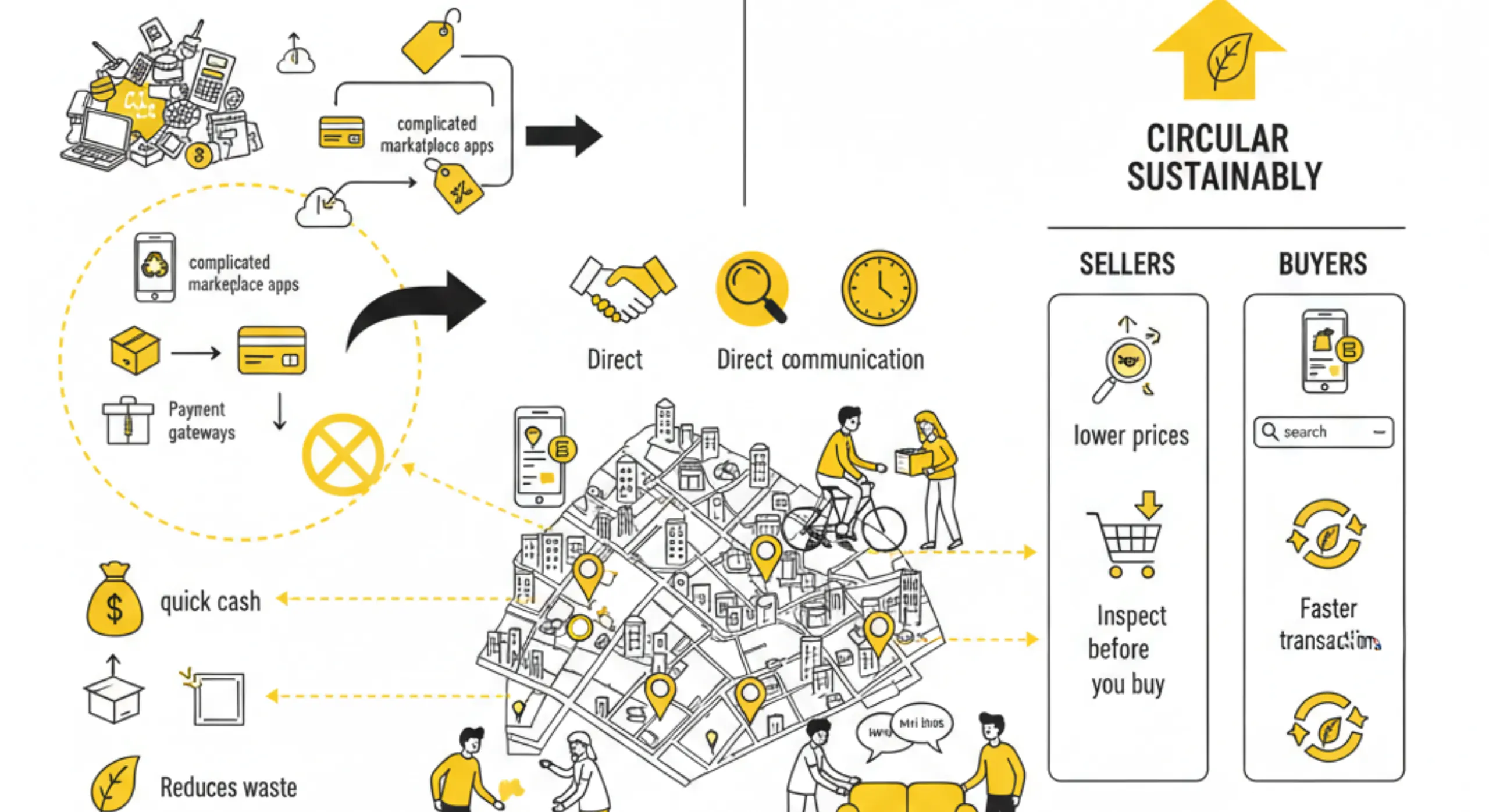
This sustainability happens naturally when buying and selling locally becomes easy. Simple classifieds enable it without making environmental impact the primary message.
Final Thoughts
Classifieds aren’t becoming popular again because they’re nostalgic. They’re succeeding because they solve real problems modern marketplaces created.
People don’t need sophisticated platforms for everyday transactions. They need simple ways to connect with nearby buyers and sellers.
When you buy and sell locally through platforms like Sympl, you’re using tools that respect your time, intelligence, and need for straightforward solutions.
List quickly. Connect directly. Transact locally. That’s not revolutionary, it’s practical.
The complexity that marketplaces added over the years didn’t improve local transactions. It just made them harder.
Classifieds are back because they work. Simple, direct, local, and efficient.
For anyone tired of platform overhead for simple transactions, modern classifieds offer what they always did: an easy way to exchange items with people nearby.
That’s not nostalgia. That’s just good sense.