

Many large enterprises are still managing critical quality processes manually. Paper-based procedures, spreadsheet tracking, email approvals, and shared network drives remain the operational reality in organizations that have otherwise modernized their technology infrastructure. This is not because quality teams are resistant to technology. It is because digitizing quality processes at enterprise scale is operationally complex and carries significant risk if done poorly.
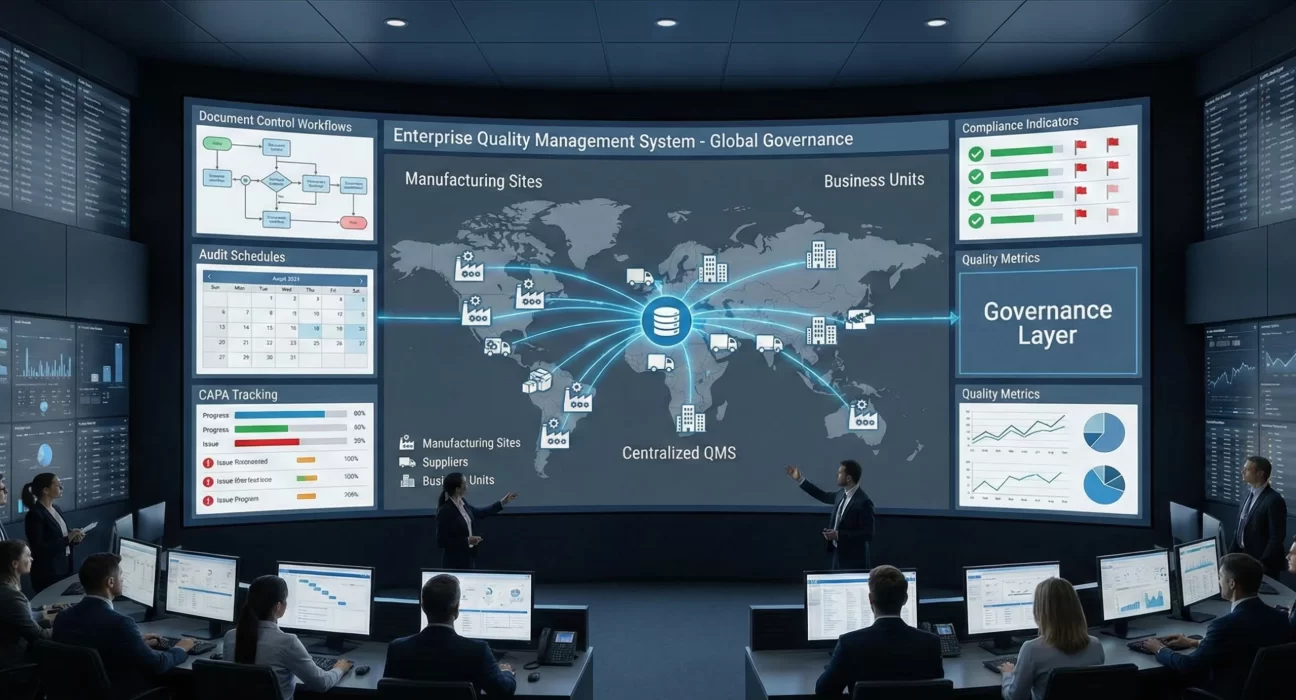
The cost of staying with manual processes is measurable. Quality teams spend excessive time on administrative tasks instead of actual quality improvement. Data is fragmented across sites and systems, making enterprise-wide visibility nearly impossible. Audit preparation requires weeks of manual document gathering. Root cause analysis is delayed because relevant information is scattered across multiple sources. Compliance gaps go undetected until regulatory inspections find them.
At the same time, the risk of poorly executed digital transformation is real. Quality processes are often highly regulated, deeply embedded in production operations, and subject to strict validation requirements. A failed QMS implementation can disrupt manufacturing, create compliance exposure, and damage relationships with regulatory bodies. This is why many enterprises continue tolerating inefficient manual processes rather than accepting the implementation risk.
This article addresses how to move from manual to automated quality processes in a way that reduces operational risk rather than creating it. The focus is on practical execution, not theoretical benefits.
Understanding What You Are Actually Transforming
Digital transformation sounds like a technology initiative, but in quality management it is fundamentally a process transformation. The technology enables the change, but the hard work is redesigning how quality processes actually operate across your organization.
Start by mapping your current state honestly. Most enterprises discover that their quality processes are more fragmented than they realized. Different sites follow different procedures. Document approval chains vary by business unit. CAPA workflows have evolved organically over years. Inspection records are kept in different formats. Supplier quality management differs by procurement region. This variability has developed over time to accommodate local needs, but it creates significant complexity when you attempt to standardize and automate.
The temptation is to automate processes exactly as they currently exist. This is a mistake. If your current processes are inefficient or inconsistent, automating them just makes the inefficiency permanent and harder to change. Digital transformation should be an opportunity to standardize where it makes sense, eliminate unnecessary steps, and build processes that scale across the enterprise.
This means you need to make hard decisions about what will be standardized globally versus what will remain locally flexible. A global manufacturer might standardize CAPA workflows and document control processes while allowing local flexibility in inspection procedures that are specific to different production environments. Getting agreement on these decisions requires engaging quality leaders from different parts of the organization, which takes time but is essential for successful adoption.
The other reality is that not everything can or should be automated immediately. Some quality processes are straightforward to digitize. Others are complex, heavily regulated, or dependent on integration with manufacturing systems that need upgrading first. A realistic transformation roadmap sequences automation efforts based on value, feasibility, and risk. Organizations that try to automate everything simultaneously create unmanageable complexity and increase the likelihood of failure.
The Integration Challenge in QMS Automation
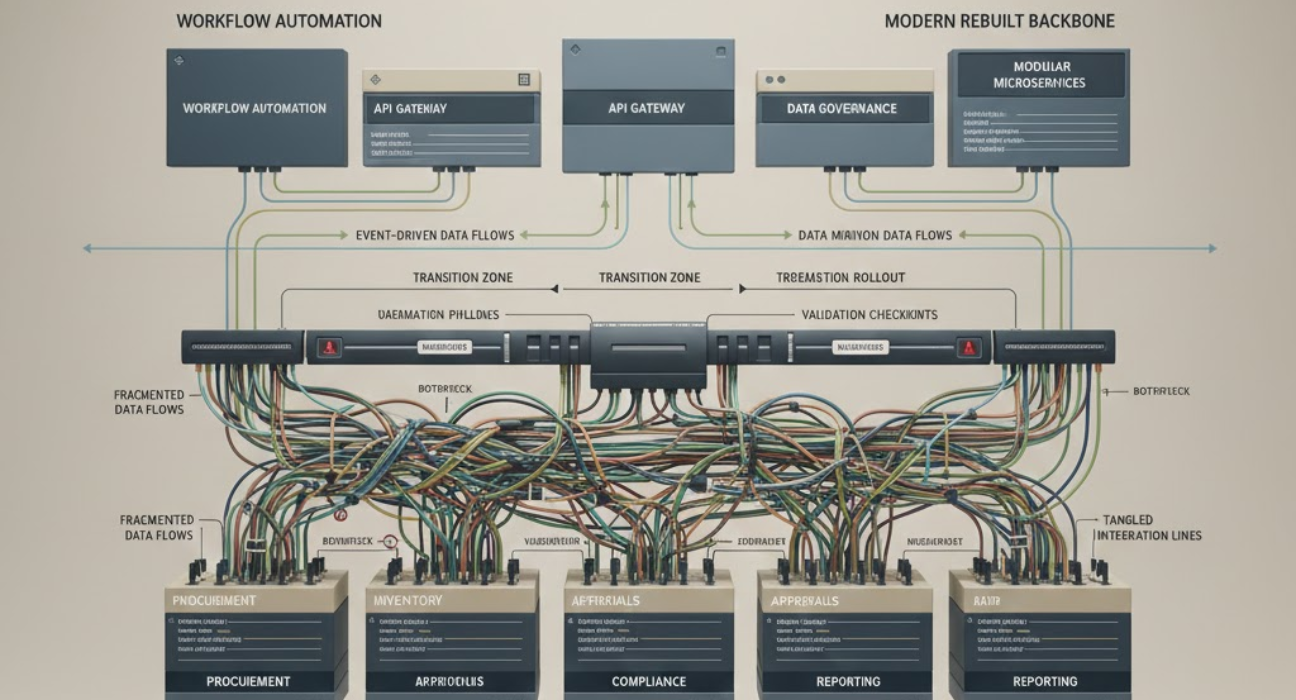
Automated quality processes require data from production systems, supplier systems, customer systems, and laboratory systems. Manual processes worked around this by having quality staff manually gather information from different sources. Automated processes need this data to flow electronically, which requires integration.
This is where many QMS digital transformation programs encounter serious obstacles. Your quality system needs to connect with your ERP for material traceability, with your MES for production data, with your LIMS for test results, with your document management system for controlled documents, and potentially with supplier portals for vendor quality data. Each integration has technical dependencies, requires coordination with system owners who have their own priorities, and introduces potential points of failure.
The technical integration work is substantial but manageable with the right expertise. The harder challenge is often organizational. The team that owns your ERP system has a roadmap that does not include QMS integration. Your MES vendor requires a system upgrade before they will support the integration you need. Your LIMS is managed by a separate department that has different governance processes and approval timelines. Your QMS transformation cannot proceed faster than these dependencies, and these dependencies are often outside your direct control.
Organizations that succeed with QMS automation start integration planning early and treat it as a primary risk area. They engage system owners months before integration work needs to begin. They identify dependencies, negotiate timelines, and build contingency plans for scenarios where integration is delayed. They also make architectural decisions about integration patterns, middleware, and data flows that will support long-term maintainability, not just immediate project needs.
The other consideration is data quality. When quality data is managed manually, quality staff compensate for data inconsistencies and gaps through local knowledge and judgment. Automated systems cannot do this. If supplier codes are inconsistent between your QMS and your procurement system, automated workflows break. If production lot numbers are formatted differently in your ERP than in your quality system, traceability fails. Data quality issues that were manageable in manual processes become blocking problems in automated ones.
This means data cleansing and standardization often becomes a prerequisite for automation. Organizations need to invest time fixing master data, standardizing coding schemes, and establishing data governance processes before automated quality workflows can operate reliably.
Regulatory and Validation Considerations
For regulated industries, QMS digital transformation is not just an operational change. It is a change that needs to be validated and approved by regulatory bodies. This adds significant time and complexity to transformation programs.
Computer system validation is required for automated quality systems in industries like pharmaceuticals, medical devices, and aerospace. This means documenting system requirements, verifying that the system meets those requirements, establishing controls to prevent unauthorized changes, and maintaining audit trails that satisfy regulatory standards. For large-scale implementations, CSV work can take months and requires specialized expertise.
Then there is the challenge of maintaining regulatory compliance during the transition. You cannot simply turn off your current quality system and switch to a new automated platform. Regulatory obligations continue during transformation. This means you need transition plans that maintain quality oversight and compliance documentation throughout the change period. Many enterprises run parallel systems during transition, which increases cost and complexity but reduces regulatory risk.
Regulatory bodies also need to be confident that your new automated system is reliable before they will accept it as your official quality system of record. This often requires successfully completing one or more regulatory inspections using the new system before you can fully decommission manual processes. Building this validation and acceptance period into your transformation timeline is essential but often overlooked.
Organizations in regulated industries should expect QMS digital transformation to take longer than comparable projects in non-regulated sectors. Realistic timelines typically range from twelve to twenty-four months depending on scope and complexity. Organizations that try to compress these timelines create compliance risk that regulators will eventually identify.
Managing Organizational Change at Scale
Technology and process changes are manageable. Getting thousands of people across multiple sites to change how they work is the harder challenge. Quality staff, production personnel, quality managers, and site leadership all need to understand, accept, and adopt new automated processes. If they resist or work around the new system, your transformation fails regardless of how well the technology works.
This requires change management that goes beyond training. People need to understand why the change is happening, what it means for their specific role, and what support will be available during the transition. They need to see that leadership is committed to the change and that the new system will actually make their work better, not just different.
Resistance often comes from quality personnel who have deep expertise in current processes and are skeptical that automated systems can handle the complexity they deal with daily. This skepticism is not unfounded. Automated systems that are poorly configured or that do not accommodate real-world scenarios create more work than they eliminate. Quality staff who have experienced failed technology implementations before will be particularly cautious about adopting new systems.
The way to address this is through involvement and validation. Engage experienced quality personnel in system design. Let them test the system and provide feedback before it goes live. Address their concerns and demonstrate that the automated processes actually work in realistic scenarios. When quality staff see that the new system was built with input from people who understand their work, adoption improves significantly.
Phased rollout also helps manage organizational change. Starting with pilot sites allows you to validate that automated processes work in production environments, identify issues that were not apparent during design, and build success stories that reduce resistance at other sites. The pilot sites also become sources of expertise that can support later deployments.
How Ozrit Approaches QMS Digital Transformation Programs
Ozrit is a global technology services company that delivers enterprise programs for large organizations. We have led QMS digital transformation initiatives for manufacturers and life sciences companies where quality processes are heavily regulated and failure is not an option.
Our approach starts with understanding your current state before proposing solutions. We map your existing quality processes across different sites and business units, identify what needs to be standardized, and determine which processes should be prioritized for automation. This discovery work is led by senior consultants who have delivered similar transformations in regulated industries and who understand the organizational and regulatory dynamics involved.
We build realistic transformation roadmaps that sequence automation efforts based on value, feasibility, and risk. We do not recommend automating everything simultaneously. Instead, we identify high-value processes that can be automated with manageable risk and use those as foundation for broader transformation. This phased approach delivers incremental value while building organizational confidence in the new system.
Integration planning is a core part of our methodology. We engage the teams that own your ERP, MES, LIMS, and other connected systems early in the program. We map integration dependencies, design integration architecture that will support long-term operations, and build testing processes that validate integration reliability before go-live. We have delivered these integrations for large enterprises with complex system landscapes and understand the technical and organizational work required.
For regulated industries, we manage computer system validation as an integrated workstream, not an afterthought. Our teams include validation specialists who understand regulatory requirements and can execute CSV activities in parallel with implementation work. This integrated approach reduces overall program timelines compared to treating validation as a separate phase after implementation.
Our directors and principal consultants stay involved throughout QMS transformation programs because these initiatives require senior judgment about process standardization decisions, integration priorities, and risk management. This is not work that should be delegated entirely to junior delivery teams.
After go-live, we provide 24/7 support to ensure automated quality processes continue operating reliably. Our support teams understand your specific implementation and can respond immediately to issues that could disrupt quality operations or create compliance risk. For regulated enterprises, this level of ongoing support is essential infrastructure.
We have delivered QMS digital transformation programs for organizations with dozens of manufacturing sites across multiple countries and regulatory jurisdictions. The timeline for these programs typically ranges from twelve to eighteen months, depending on scope and complexity.
Final Perspective
Moving from manual to automated quality processes is not primarily a technology challenge. It is an organizational transformation that requires process standardization, system integration, regulatory validation, and change management across a large, complex enterprise. The technology enables the transformation, but execution depends on addressing the organizational, regulatory, and operational realities that make enterprise quality management complex.
Organizations that approach QMS digital transformation as a technology project consistently struggle. Organizations that treat it as a business transformation program, engage the right expertise, build realistic plans with appropriate timelines, and manage risk deliberately get systems that actually improve quality operations rather than just digitizing existing inefficiency.