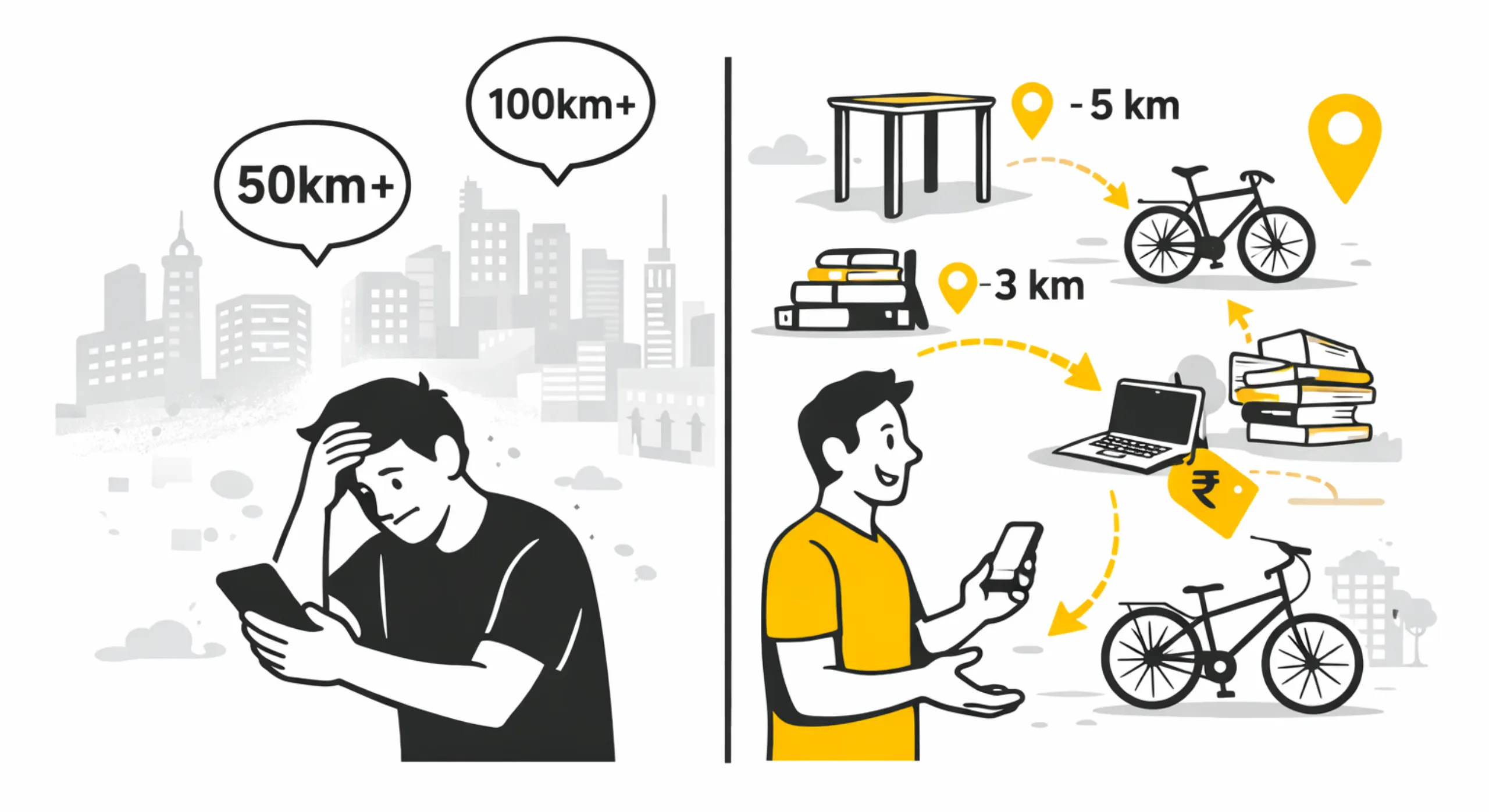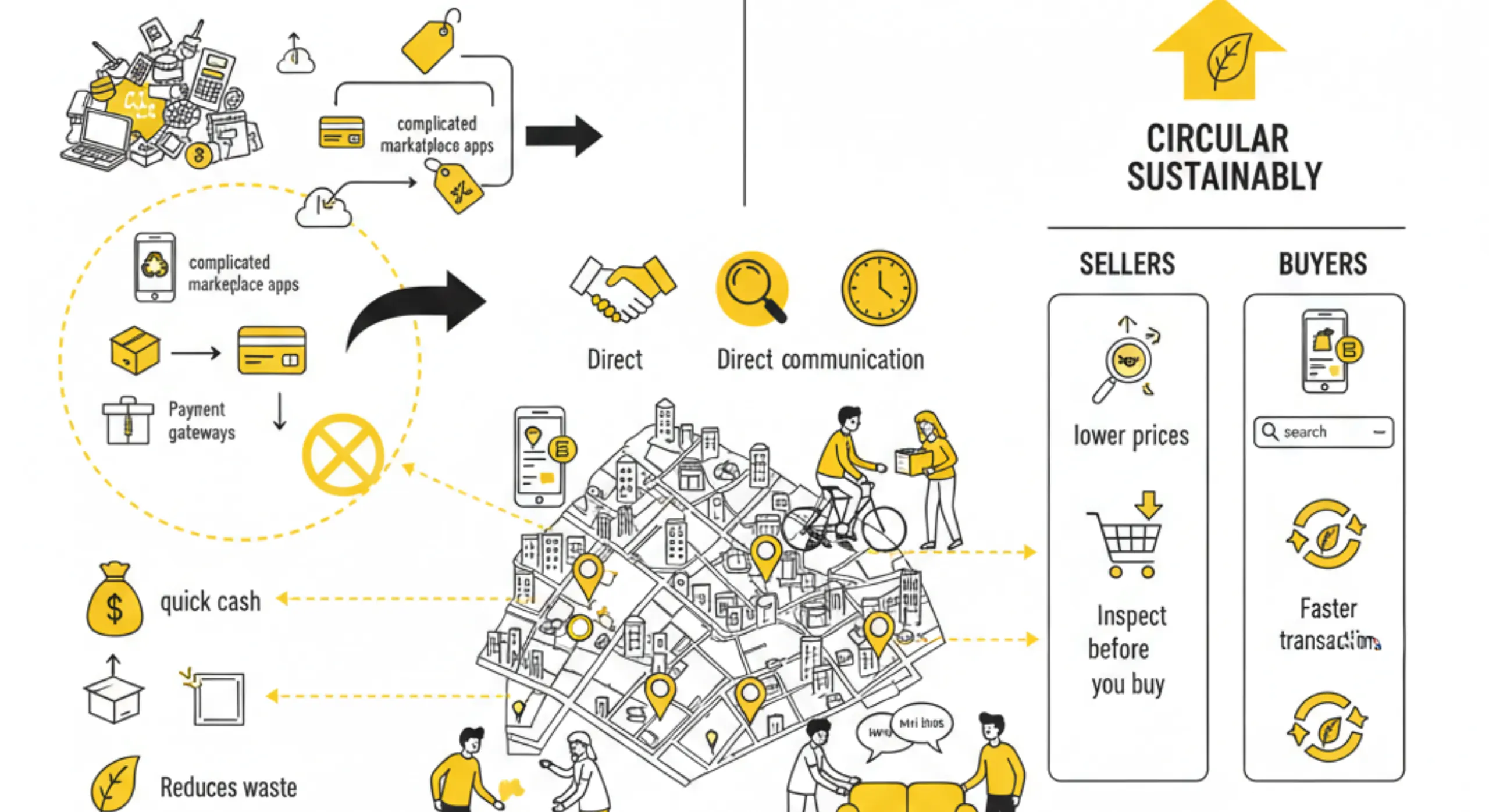


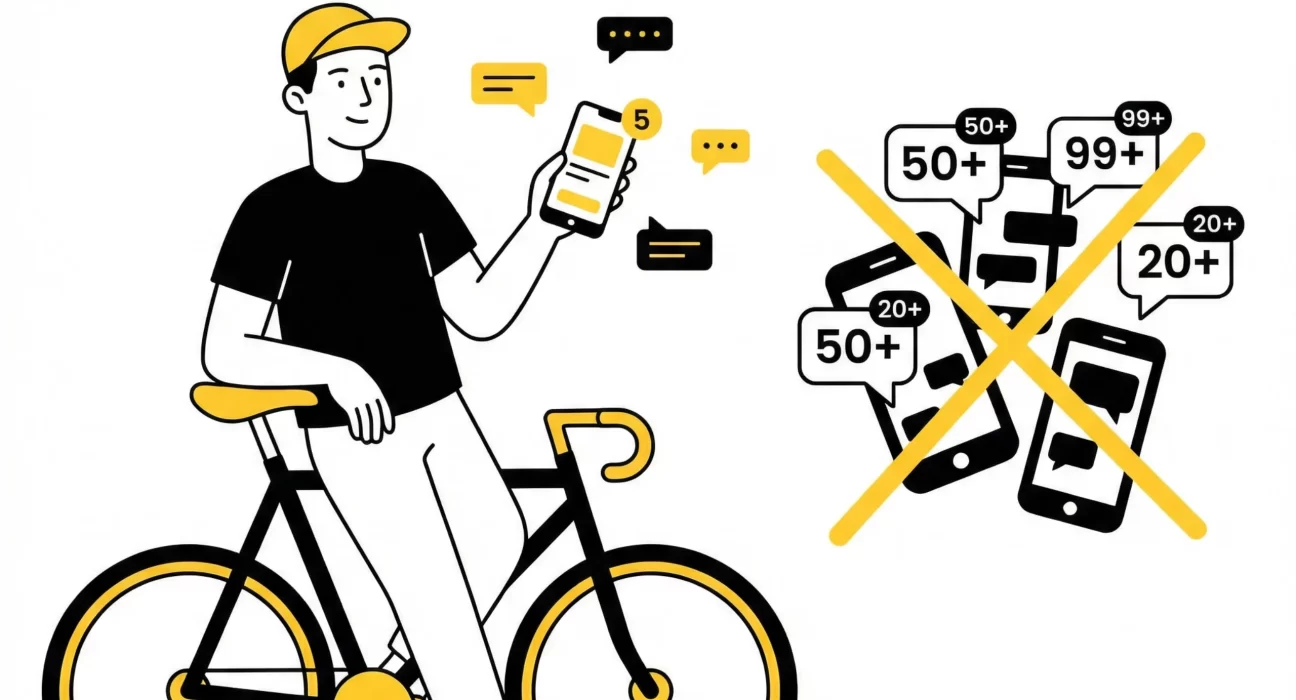
When Karan listed his old refrigerator on a popular marketplace, his phone didn’t stop ringing for three days. Dozens of calls and messages from people asking the same questions he’d already answered in the listing. People calling from distant areas asking if he’d deliver. Others just browse with no real intent to buy. He sold nothing and felt exhausted. The next time he needed to sell something a bike he tried a local classifieds approach. He received five calls total. Three were from people nearby who actually came to see it. The second visitor bought it. Five calls. One sale. Less stress. That’s when Karan realized fewer calls from the right people is far better than constant messages from anyone and everyone.
The Problem with Too Much Attention
Most sellers think more visibility automatically means faster sales. List on the biggest platform, reach the maximum people, get your item sold quickly.
In reality, it often works differently.
What actually happens with mass visibility:
- Your phone buzzes constantly with inquiries
- Most messages are from people too far away to realistically buy
- You answer the same questions repeatedly despite clear descriptions
- Serious buyers get lost among dozens of casual browsers
- Time wasters and bargain hunters dominate your notifications
- You spend hours managing inquiries but close no deals
After a few days of this, selling starts feeling like a second job, one you didn’t sign up for and aren’t getting paid for.
Understanding the Quality vs Quantity Problem
Large marketplaces measure success by engagement, how many people see your listing, how many messages you receive, and how many clicks you get.
But for sellers, none of that matters if the item doesn’t actually sell.
Why more isn’t always better:
When your listing reaches thousands of people across a city or state, most of them aren’t qualified buyers. They’re browsing. Comparing. Asking questions they’ll ask ten other sellers too. Your refrigerator might get seen by 500 people. But if only 5 of them can realistically visit your location and have the budget to buy, the other 495 views are just noise. Noise that you have to manage.
How Local Selling Filters Automatically
When you buy and sell locally, something interesting happens: the platform itself filters out most unqualified inquiries.
Geographic boundaries as natural filters:
If your listing primarily reaches people within a few kilometres, you’re automatically excluding everyone who can’t easily visit.
This drastically reduces message volume, but more importantly, it increases message quality.
Serious buyers self-select:
Someone searching specifically for items in their neighbourhood is usually closer to making a purchase decision than someone browsing nationally.
They’ve already decided they want something nearby. They’re ready to act if they find the right item.
Simpler logistics mean faster decisions:
When both buyer and seller know that meeting is easy, there’s less hesitation. Questions are practical, not hypothetical.
“Can I see it tomorrow evening?” instead of “Would you consider shipping to another city?”
A Real Comparison: Same Item, Different Approaches
Neha in Mumbai needed to sell her washing machine. She tried two different approaches.
Attempt 1: Large marketplace
- 43 messages in four days
- Questions mostly about delivery and shipping
- Three people promised to visit, none showed up
- Endless price negotiations over chat
- No sale after two weeks
Attempt 2: Local classifieds
- 6 messages in three days
- All from people in her area
- Two came to see it
- Second person bought it immediately
- Sold within 72 hours
Same washing machine. Same price. Same description. A completely different experience. The difference? The second approach connected her only with local buyers and sellers who could actually complete the transaction.
Why Fewer Calls Actually Speed Up Sales
It seems counterintuitive, but limiting your audience often accelerates the sale.
Less time wasted:
When you’re not answering dozens of repetitive questions, you can focus on the few serious inquiries properly. You respond faster, communicate better, and build trust with genuine buyers.
Clearer signals:
On large platforms, it’s hard to tell who’s serious. Everyone messages. Few follow through. With local selling, a message itself is a stronger signal. Someone took the time to search locally and contact you. They’re probably serious.
Faster decision cycles:
Local buyers know they can visit easily, so they decide quickly. No endless deliberation about whether the trip is worth it.
Higher conversion rate:
You might get one-tenth the inquiries, but if half of them convert to actual sales versus 2% on large platforms, you’re far ahead.
Quality matters more than quantity.
Time and Energy Saved
Mental bandwidth:
Constant notifications drain your attention. Every ping makes you check your phone, read the message, formulate a response.
When you receive five thoughtful messages instead of fifty random ones, you preserve mental energy for the rest of your life.
Phone peace:
Your phone becomes usable again. You’re not constantly in “seller mode” fielding inquiries and managing expectations. This might sound minor, but anyone who’s experienced notification overload knows how valuable phone peace is.
Simplified coordination:
Scheduling one or two serious visits is manageable. Juggling ten tentative “maybe I’ll come” promises is chaos.
Fewer calls mean simpler logistics and better organization.
Cost Benefits Beyond the Obvious
No marketing expenses:
Large platforms often tempt you to promote listings or pay for better visibility. When you’re getting tons of messages but no sales, it feels necessary. Local platforms focused on simple classifieds don’t create this pressure. Your listing reaches the right people without spending extra.
Full payment received:
No platform fees eating into your sale price. No commission deducted. What you agree on is what you get.
Reduced price pressure:
When you’re dealing with serious local buyers rather than endless negotiators, pricing holds better.
You don’t feel pressured to drop prices just to stand out from hundreds of competitors.
Real Examples of Quality Over Quantity
Selling a bike in Bangalore:
Vikram listed his bike locally. Got three calls. The first person couldn’t make the meeting. The second came, test-rode it, and bought it. Two actual interactions. One sale. Done in three days. Compare that to his previous experience selling a phone on a large marketplace 47 messages over two weeks, with most people asking if he’d reduce the price by 40% or deliver across the city.
Furniture in Delhi:
Pooja sold a sofa set. Listed locally, received four inquiries, two visits, one sale.
She later told me the best part wasn’t even the quick sale, it was having her phone back. No constant pinging. No managing expectations of distant buyers. Just a few simple conversations with nearby people.
Electronics in Pune:
A student sold his laptop through local classifieds. Five messages total. Three from his college area. I met one person at the campus café. Sold it within 24 hours.
The efficiency amazed him especially compared to friends’ stories of listing items on big platforms and getting buried in messages that led nowhere.
Home appliances in Chennai:
A family relocating sold their microwave, mixer, and fan. All three items went to different buyers within their apartment complex and neighbouring buildings.
Total calls received: eight. Total sales: three. All completed within a week.
Who Benefits Most from This Approach
Working professionals:
People with full-time jobs don’t have bandwidth to manage constant inquiries. Fewer quality calls fit their lifestyle better.
Parents and caregivers:
When you’re managing kids, household, and work, every interruption costs attention. Minimizing unnecessary calls preserves sanity.
Students during exams:
When you need to sell items fast between semesters but can’t afford constant distractions, focused local selling works perfectly.
First-time sellers:
Overwhelming message volume intimidates newcomers. Starting with a simpler, local approach builds confidence.
Anyone valuing peace:
Some people just want straightforward transactions without the chaos. Fewer calls from serious buyers delivers exactly that.
What Platforms Like Sympl Understand
Some platforms recognize that sellers don’t actually want their phones ringing constantly with low quality inquiries. They design around connecting local buyers and sellers efficiently not maximizing message volume but maximizing relevant connections. When Karan sold his bike, he wasn’t missing out by getting fewer calls. He was benefiting from better targeting. The five people who contacted him could all realistically buy. The 45 people who didn’t contact him but might have on a larger platform? Most would have wasted his time. This is the insight behind simple classifieds focused on local communities help the right people find each other, and get out of the way.
Making Fewer Calls Work for You
Write clear, complete descriptions:
When your listing answers common questions upfront, you reduce repetitive inquiries. Be specific about condition, location, price, and pickup arrangements.
Include good photos:
Clear images reduce “can you send more photos?” messages. Show the item from multiple angles, including any defects.
Set realistic prices:
Fair pricing from the start prevents endless negotiation messages. Research local rates and prices accordingly.
Mention your area clearly:
When people know exactly where you are, those too far away self-filter. This reduces irrelevant inquiries.
Respond thoughtfully to serious messages:
With fewer calls, you can afford to respond properly to each one. Good communication builds trust and closes sales faster.
When Less Really Is More
This approach works especially well for:
- Everyday items with steady local demand
- Bulky goods difficult to transport long distances
- Sellers with limited time to manage inquiries
- Items you need to sell items fast without complexity
- Anyone tired of notification overload from casual browsers
It’s not ideal for everything. Rare collectibles or very niche items might need broader reach. But for most practical selling furniture, appliances, bikes, electronics targeted local beats mass exposure.
The Conversion Rate Advantage
Here’s a simple way to think about it:
Scenario A: 50 inquiries, 2 serious buyers, 1 sale = 2% conversion
Scenario B: 5 inquiries, 3 serious buyers, 1 sale = 20% conversion
Scenario B feels quieter. Less dramatic. But it’s far more efficient. You spend less time. Less mental energy. Less phone battery. And you still make the sale often faster. This is what local buying and selling delivers. Better conversion through better targeting.
Managing Expectations and Boundaries
You don’t owe responses to everyone:
On large platforms, you might feel obligated to answer every message. With local selling and fewer inquiries, you can focus on serious conversations.
It’s okay to filter:
If someone’s first message is demanding or unreasonable, you can simply move on. You’re not desperate for every inquiry when you’re getting quality ones.
Trust the process:
Getting fewer calls can feel worrying at first if you’re used to notification overload. Trust that fewer but better-matched buyers work just as well, usually better.
Value your time:
Every message you don’t have to answer is time saved. Every irrelevant call you don’t receive is peace preserved. These benefits are real even if harder to measure.
The Mental Health Aspect
Constant notifications affect you more than you realize. Your phone buzzes. You check it. It’s another question you’ve already answered. You respond anyway. Five minutes later, another message. This pattern repeats dozens of times. By evening, you’re exhausted from managing a listing that hasn’t even sold. Fewer calls means fewer interruptions. Fewer context switches. Fewer moments of hope followed by disappointment when another inquiry leads nowhere. This psychological benefit is significant, even if it’s not about money or speed.
Common Questions Addressed
“What if the few people who contact me don’t buy?”
Then you wait for the next few. Local items typically sell within days or weeks. You’re not depending on massive volume, just patient matching with the right buyer.
“Won’t my item take longer to sell?”
Usually no. Quality inquiries close faster than quantity. One serious local buyer beats fifty distant browsers.
“What if I’m in a hurry?”
Local transactions actually close faster. Proximity speeds everything from first contact to completed sale.
“Is this approach safe?”
Meeting local buyers comes with natural accountability. Basic precautions still apply, but the local aspect often increases comfort levels for both parties.
Conclusion
When Karan realized five calls felt better than fifty, he understood something important about modern selling. More attention isn’t the goal. The right attention is. Platforms like Sympl focus on this connecting you with local buyers who can actually complete transactions, not generating maximum message volume. Next time you need to sell something, consider whether you really want your listing seen by everyone, or whether you’d prefer it seen by the right people. You might discover what many others already have: that fewer calls from serious, nearby buyers is exactly what you needed all along.