


Every large enterprise has lived through the same frustrating cycle. A strategic program gets approved. Budget is allocated. Teams are assembled. Leadership sets a clear deadline. Then, three months in, the timeline starts slipping. Six months later, the project is either months behind schedule or being quietly rescoped to salvage what’s left of the original vision.
The common explanations are familiar. Scope creep. Resource constraints. Vendor delays. Integration complexity. Stakeholder misalignment. These are all true, but they’re symptoms, not causes. The real reason enterprise programs miss timelines runs deeper, and it’s something most organisations struggle to admit or address.
The Fundamental Problem: Execution Handoff Risk
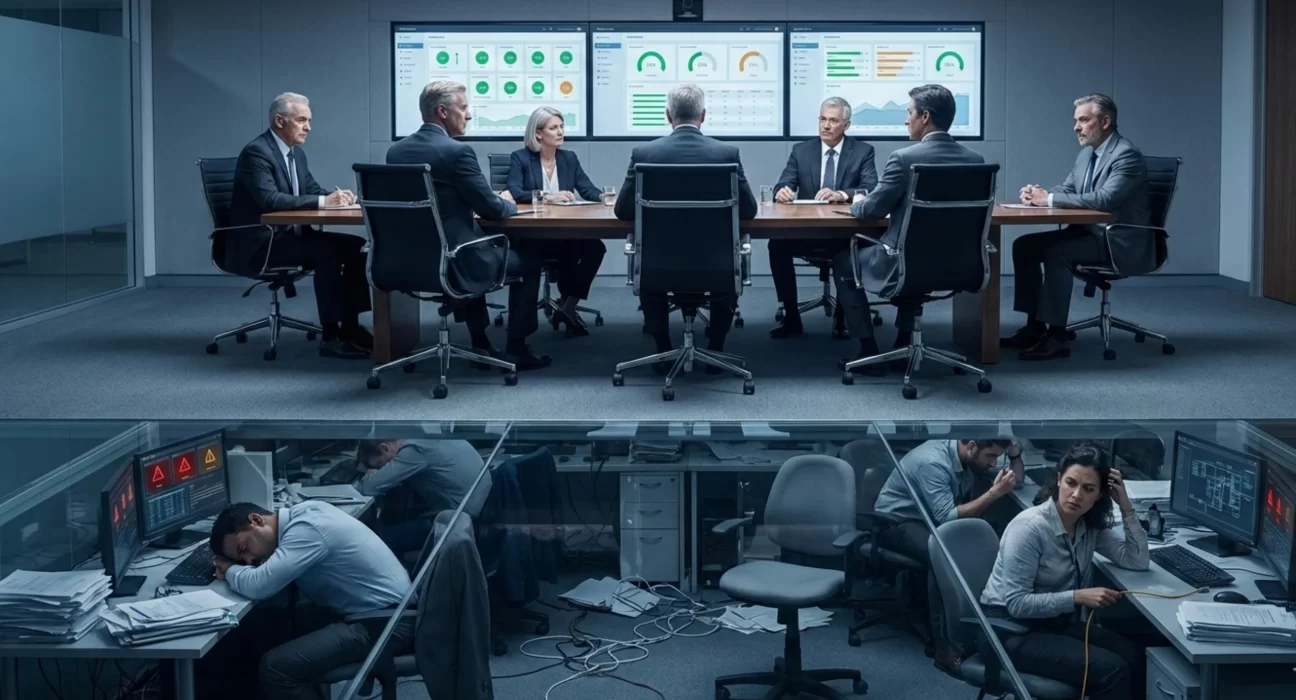
The core issue is this: large enterprises separate decision-making from execution, and they do it across multiple layers. Strategy teams define objectives. Architecture teams design solutions. Procurement teams select vendors. Integration teams build connections. Operations teams manage the result. Each handoff introduces delay, miscommunication, and accountability gaps.
When a program starts, everyone believes they have clarity. The business case is approved. Requirements are documented. The vendor presents a confident plan. But the people who will actually build the system weren’t in the room when decisions were made. They inherit a plan created by others, often with assumptions that don’t survive contact with reality.
This isn’t a failure of planning. It’s a structural problem. The knowledge needed to make good decisions exists in one place. The ability to execute sits somewhere else. By the time execution begins, critical context has been lost, translated, or simplified beyond usefulness.
Why Scale Makes This Worse
Small projects can survive handoff problems because a single person often understands the full picture. When things go wrong, they adjust quickly. In large enterprise programs, no single person holds complete context. Business stakeholders understand the objective but not the technical constraints. Technical teams understand the architecture but not the operational realities. Vendors understand their own product but not how it fits into the broader enterprise landscape.
This fragmentation creates predictable failure patterns. A vendor delivers exactly what was specified in the contract, but it doesn’t solve the actual business problem. An integration works perfectly in testing but breaks under production load because the team didn’t understand real usage patterns. A data migration plan looks sound until someone realises a legacy system has undocumented dependencies that will take months to untangle.
Each of these problems is fixable, but discovering them late in delivery destroys timelines. The organisation either rushes to adapt, accepts reduced scope, or delays go-live. All three options erode trust between business and technology teams.
The Governance Trap
Enterprises respond to delivery risk by adding governance. More checkpoints. More approvals. More documentation. The theory is that additional oversight will catch problems earlier. In practice, governance layers slow decision-making without improving execution quality.
Consider what happens when a technical team discovers a problem that requires changing the original plan. They document the issue, present options, and wait for approval. The approval process involves multiple stakeholders, each with partial context and competing priorities. Weeks pass. When approval finally comes, the technical team has moved on to other work. Resuming the original task introduces additional delay.
Heavy governance doesn’t prevent timeline slips. It guarantees them. Every checkpoint adds latency. Every approval introduces the risk that decision-makers without full technical context will make choices that seem reasonable but create downstream problems.
The irony is that governance exists to reduce risk, but it often increases delivery risk by separating decision-making from the people who understand implementation reality.
The Vendor Coordination Challenge
Most large enterprise programs involve multiple vendors. One provides core platform capability. Another handles integration middleware. A third manages data migration. A fourth provides managed services. Each vendor operates under separate contracts with different delivery managers, timelines, and incentive structures.
Coordinating across vendors becomes a full-time job. When one vendor falls behind, it creates cascading delays for everyone else. When vendors disagree on technical approaches, the enterprise becomes a mediator trying to resolve disputes between parties who have no direct accountability to each other.
Enterprises handle this by appointing program managers and system integrators. These roles are necessary, but they introduce another handoff layer. The system integrator coordinates vendors but doesn’t directly control their work. When problems arise, resolution depends on contract terms, escalation processes, and commercial negotiations rather than direct problem-solving.
This structure is slow by design. It protects the enterprise from vendor risk, but it sacrifices execution speed and decision-making clarity.
How Ozrit Approaches This Differently
Ozrit was built specifically to solve the execution handoff problem for enterprise programs. The structure is deliberately different from traditional vendor models.
When Ozrit takes on an enterprise program, senior technical leaders are involved from the first conversation. These aren’t salespeople or account managers. They’re the architects and engineers who will actually build the solution. They participate in scoping, ask detailed questions about the technical environment, and identify integration challenges before contracts are signed.
This approach changes the quality of early decisions. Because the people who will execute are present during planning, commitments are realistic. Technical constraints are surfaced early. Alternative approaches are discussed while there’s still time to adjust scope or budget.
Once delivery starts, the same senior team remains directly involved. There’s no handoff to a separate delivery organisation. The people who made commitments are accountable for meeting them. This eliminates the knowledge loss and accountability gaps that plague traditional vendor engagements.
Ozrit also structures delivery differently. Rather than assembling large project teams with multiple specialisations, Ozrit uses small, highly capable teams where each member can work across the full technical stack. This reduces coordination overhead and allows faster decision-making. When a problem emerges, the team can adapt immediately without waiting for approvals or coordination across multiple groups.
The team isn’t just technically strong. They’ve worked together on previous enterprise programs. They understand how large organisations operate, where delays typically occur, and how to navigate governance without getting blocked. They know when to escalate, when to provide more documentation, and when to make pragmatic trade-offs that keep delivery moving.
Onboarding As Risk Reduction
One of the most underestimated delivery risks in enterprise programs is knowledge transfer. When a new vendor starts work, they need to understand existing systems, data models, integration patterns, security requirements, operational procedures, and organisational context. This learning process takes weeks or months, and mistakes made during this period often don’t surface until much later.
Ozrit invests heavily in onboarding because it directly reduces delivery risk. Before development starts, the team spends time with enterprise architects, security teams, operations groups, and business stakeholders. They review existing documentation, explore current systems, and map dependencies. This isn’t just about gathering requirements. It’s about building the contextual understanding needed to make good technical decisions throughout delivery.
The onboarding process also establishes communication patterns. The enterprise learns how Ozrit operates. Ozrit learns how the enterprise makes decisions. Expectations are clarified on both sides. This upfront investment prevents misunderstandings that would otherwise cause delays later in the program.
When delivery begins, the team already understands the environment. They’re not learning basic concepts about the enterprise’s architecture or governance while trying to hit delivery milestones. This head start translates directly into faster, more reliable execution.
Realistic Timelines and Structured Delivery
Ozrit doesn’t promise impossible timelines. The initial assessment includes honest evaluation of technical complexity, integration requirements, and organisational dependencies. If a program will realistically take eight months, that’s the timeline presented, even if the enterprise hoped for four months.
This honesty builds trust. Enterprises have been burned by vendors who promise aggressive timelines to win deals, then miss every milestone. A realistic timeline, delivered consistently, is far more valuable than an optimistic timeline that collapses under pressure.
Delivery is structured into clear phases with specific milestones. Each phase has defined objectives, acceptance criteria, and demonstration points. This structure allows the enterprise to track progress, validate direction, and make course corrections without waiting until the end of the program to discover problems.
Milestones aren’t just technical checkpoints. They include business stakeholder reviews, operational readiness assessments, and security validation. This ensures that what’s being built will actually work when it reaches production, not just pass technical testing.
Continuous Support and Operational Handoff
Many enterprise programs succeed during implementation but fail during the transition to operations. The vendor builds the solution, demonstrates functionality, provides documentation, and then exits. The operations team, which wasn’t deeply involved in delivery, struggles to maintain what was built. Problems emerge that the vendor is no longer around to solve. The enterprise either tolerates degraded functionality or brings the vendor back under expensive support contracts.
Ozrit includes 24/7 support as part of the delivery model. This isn’t just break-fix support. It’s ongoing partnership with the enterprise operations team. When issues arise, Ozrit’s team responds quickly because they built the system and understand its internals.
More importantly, the transition to operations is planned from the beginning. Ozrit works with the enterprise operations team throughout delivery, gradually transferring knowledge and responsibility. By the time the program officially completes, operations already has experience managing the system. There’s no sudden handoff that creates operational risk.
This approach protects the enterprise’s investment. Technology that works well in production, with reliable support, delivers ongoing business value. Technology that’s fragile or poorly understood becomes a liability that limits future programs.
The Pattern That Works
The reason enterprise programs miss timelines isn’t because enterprises plan poorly or vendors under-deliver. It’s because the traditional structure of enterprise delivery creates too many handoffs, too many coordination points, and too much separation between decision-making and execution.
Solving this requires changing the delivery model. Keep the people who make commitments accountable for execution. Eliminate unnecessary coordination layers. Invest in real understanding of the enterprise environment before starting work. Build small, capable teams rather than large, specialised ones. Structure delivery to validate progress continuously rather than waiting for final testing.
These aren’t revolutionary ideas. They’re practical adjustments that align with how complex work actually gets done. Enterprises that adopt this approach see programs delivered on time, with fewer surprises, and with better operational outcomes. The technology works as expected because the people who built it understood what was needed from the beginning.